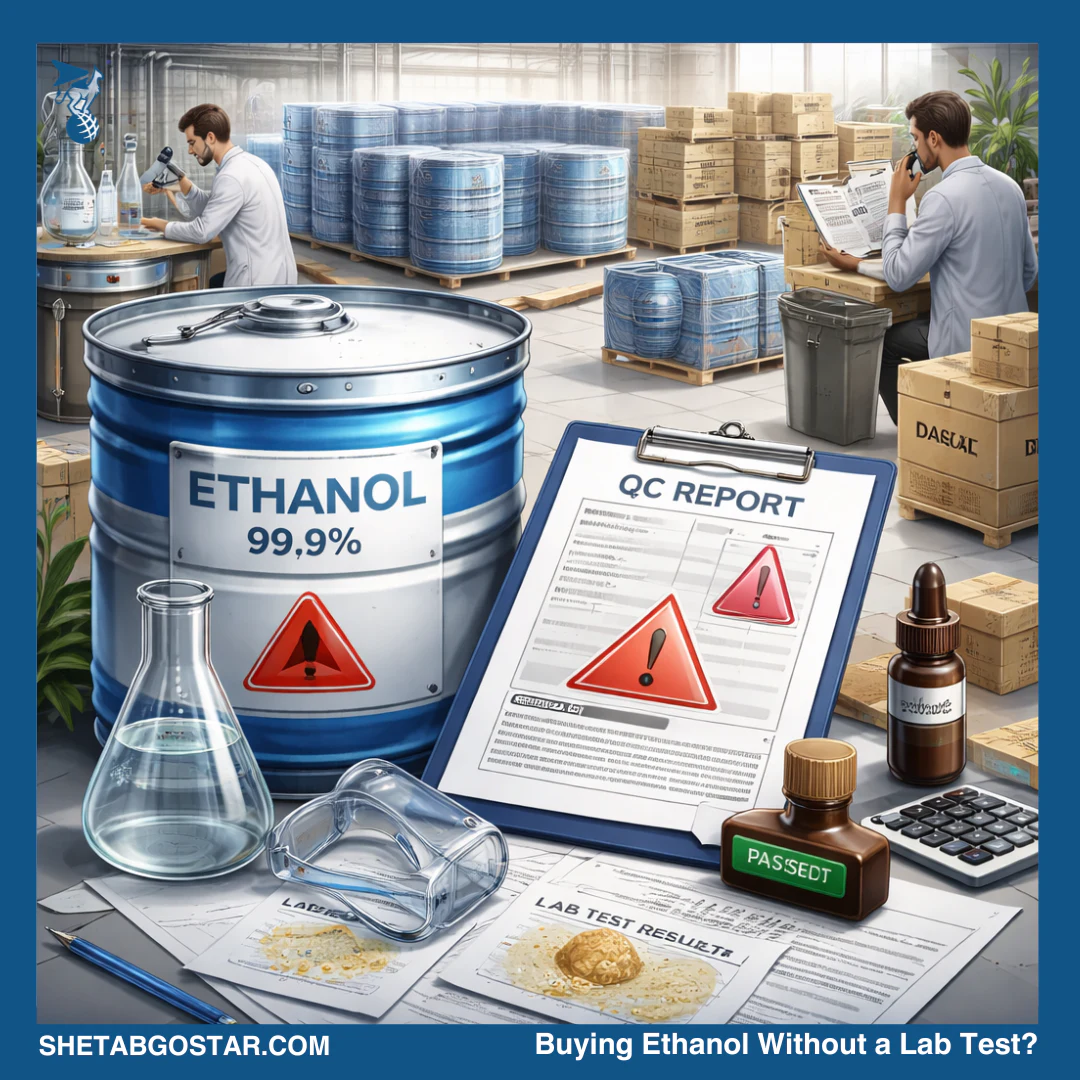
Buying Ethanol Without a Lab Test? Here’s What You’re Actually Risking
In industrial procurement, ethanol is often treated as a standard commodity. However, purchasing ethanol without proper quality verification can create serious operational, financial, and regulatory problems. From contamination risks to equipment damage, skipping ethanol quality testing industrial procedures may cost far more than the initial savings from a cheaper supplier.
Whether ethanol is used in pharmaceuticals, chemicals, cosmetics, fuel blending, or food production, quality consistency is critical. Buyers who rely only on supplier claims or basic documentation expose their operations to avoidable risks.
Why Industrial Ethanol Quality Matters
Industrial ethanol must meet strict purity and performance standards depending on the application. Even small variations in composition can affect product quality, safety, and production efficiency.
For example:
- High water content may reduce solvent effectiveness.
- Methanol contamination can create severe safety hazards.
- Impurities may damage sensitive equipment.
- Inconsistent concentration can disrupt manufacturing formulas.
This is why ethanol quality testing industrial processes are essential before approving any shipment for operational use.
The Hidden Risks of Buying Ethanol Without Testing
1. Product Contamination
One of the biggest risks is contamination from unwanted chemicals or low-grade raw materials. Contaminated ethanol can negatively affect final products, especially in industries such as pharmaceuticals, cosmetics, and food processing.
Common contaminants include:
- Methanol
- Heavy metals
- Residual solvents
- Excessive moisture
- Organic impurities
Without laboratory verification, these issues may remain undetected until products fail quality control or customers report problems.
2. Equipment Corrosion and Operational Damage
Low-quality ethanol may contain water or corrosive compounds that damage storage tanks, pipelines, pumps, and processing equipment. Over time, this leads to:
- Increased maintenance costs
- Production downtime
- Shorter equipment lifespan
- Unexpected operational failures
Industrial facilities that depend on stable chemical performance cannot afford inconsistent raw materials.
3. Regulatory and Compliance Problems
Many industries operate under strict regulatory frameworks. Using substandard ethanol may violate compliance standards related to:
- Product purity
- Safety requirements
- Environmental regulations
- Import/export documentation
Failure to meet regulatory standards can result in rejected shipments, legal penalties, or reputational damage.
4. Financial Losses from Poor Performance
Cheap ethanol is not always cost-effective. Poor-quality material often creates hidden costs such as:
- Reprocessing defective products
- Production interruptions
- Customer complaints
- Product recalls
- Waste disposal expenses
In many cases, a single failed batch costs more than comprehensive laboratory testing.
What Should Be Included in Ethanol Quality Testing?
A professional ethanol quality testing industrial program typically evaluates several important parameters.
Purity Analysis
Purity testing confirms ethanol concentration and identifies unwanted substances.
Common methods include:
- Gas Chromatography (GC)
- High-Performance Liquid Chromatography (HPLC)
- Density analysis
Water Content Testing
Water significantly affects ethanol performance. Karl Fischer titration is commonly used to measure moisture levels accurately.
Methanol Detection
Methanol contamination represents a major health and safety risk. Reliable testing ensures the ethanol meets industrial safety standards.
Residue and Impurity Analysis
Testing laboratories also examine:
- Sulfur compounds
- Organic residues
- Heavy metals
- Acidity levels
These tests help buyers verify overall chemical stability and performance.
How to Reduce Procurement Risks
Work with Verified Suppliers
Choose suppliers with:
- Consistent export history
- Third-party certifications
- Transparent documentation
- Stable production standards
Reliable suppliers are usually willing to provide detailed Certificates of Analysis (COA).
Request Third-Party Laboratory Reports
Independent testing provides unbiased verification of ethanol quality. It also reduces the risk of manipulated or inaccurate supplier documentation.
Inspect Storage and Transportation Conditions
Even high-quality ethanol can degrade during transportation if stored improperly. Buyers should confirm:
- Tank cleanliness
- Proper sealing
- Moisture protection
- Temperature control
Establish Incoming Quality Control Procedures
Every industrial facility should implement internal inspection protocols before unloading bulk ethanol shipments.
A strong incoming inspection system minimizes operational surprises and improves procurement reliability.
Industries Most Vulnerable to Poor Ethanol Quality
Some industries face higher risks when ethanol quality is inconsistent:
- Pharmaceutical manufacturing
- Cosmetics production
- Food and beverage processing
- Printing and coatings
- Chemical manufacturing
- Fuel blending operations
For these sectors, laboratory testing is not optional — it is part of operational risk management.
Why Ethanol Testing Is a Strategic Investment
Many procurement teams focus primarily on price negotiations. However, experienced industrial buyers understand that consistent quality creates long-term savings.
Investing in ethanol quality testing industrial procedures helps companies:
- Protect production quality
- Reduce equipment failures
- Maintain regulatory compliance
- Improve supplier accountability
- Prevent costly operational disruptions
In global chemical markets, quality verification is no longer just a technical process — it is a competitive advantage.
Conclusion
Buying ethanol without laboratory testing may appear to save time or money initially, but the long-term risks can be severe. Contamination, equipment damage, compliance failures, and production losses often originate from poor-quality raw materials.
Implementing reliable ethanol quality testing industrial procedures allows businesses to protect product integrity, operational stability, and customer trust. In industrial procurement, verified quality is always more valuable than uncertain savings.