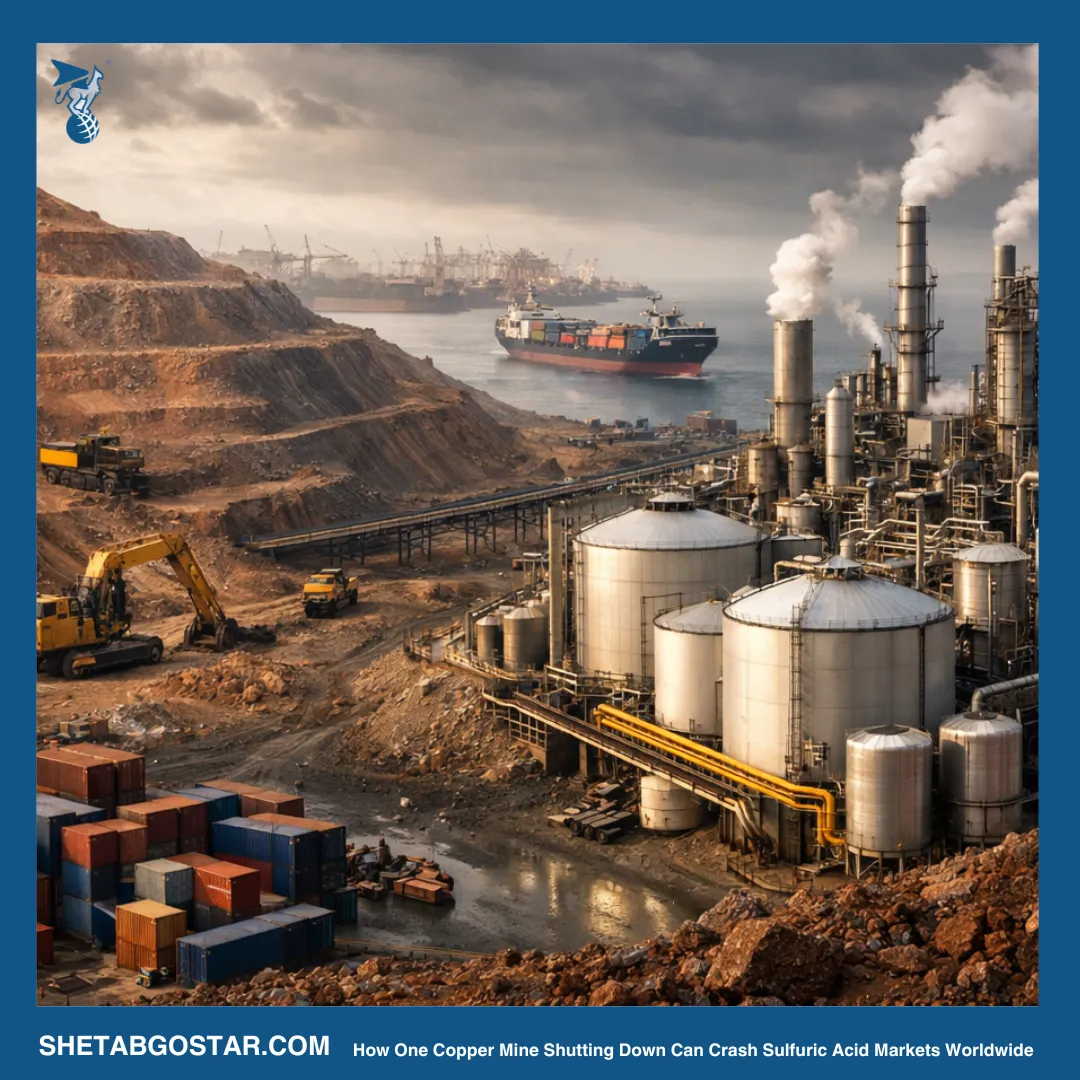
How One Copper Mine Shutting Down Can Crash Sulfuric Acid Markets Worldwide
The global sulfuric acid market is more interconnected than many industrial buyers realize. A major disruption in the sulfuric acid copper mine supply chain can rapidly affect prices, availability, and procurement strategies across multiple industries. While sulfuric acid is widely used in fertilizers, chemicals, mining, and water treatment, a significant portion of global supply originates as a byproduct of copper smelting operations.
As a result, when a large copper mine shuts down unexpectedly, the consequences can extend far beyond the mining sector and create ripple effects throughout the global sulfuric acid market.
Understanding the Sulfuric Acid–Copper Connection
Many industrial buyers assume sulfuric acid is produced independently. However, a substantial share of global sulfuric acid production comes from sulfur dioxide captured during copper smelting.
When copper ore containing sulfur compounds is processed, sulfur dioxide gas is generated. Instead of releasing these emissions into the atmosphere, modern smelters convert them into sulfuric acid. This process creates an important link between copper production and sulfuric acid availability.
Therefore, any disruption in copper mining or smelting operations directly impacts the sulfuric acid copper mine supply balance worldwide.
Why a Single Copper Mine Matters
Large copper mines often feed massive smelting complexes that produce hundreds of thousands of tons of sulfuric acid annually.
When one of these operations experiences:
- Environmental restrictions
- Labor strikes
- Equipment failures
- Government interventions
- Natural disasters
sulfuric acid output can drop dramatically.
Because many regions depend on a limited number of major producers, even a single shutdown can create significant supply shortages.
Immediate Effects on Global Sulfuric Acid Markets
1. Reduced Supply Availability
The most direct impact is a reduction in available sulfuric acid volumes. Buyers who depend on spot purchases often face immediate challenges securing product.
Industries affected may include:
- Fertilizer manufacturing
- Phosphate processing
- Metal extraction
- Chemical production
- Water treatment facilities
As inventories tighten, procurement teams must compete for limited supply.
2. Rising Prices
A decline in production frequently triggers rapid price increases.
When buyers anticipate shortages, demand intensifies and suppliers gain pricing power. In some historical cases, sulfuric acid prices have doubled or even tripled within months following major production disruptions.
The sulfuric acid copper mine supply relationship is one of the primary reasons market volatility can occur so quickly.
3. Increased Freight Costs
When local supply disappears, buyers often source material from distant regions.
This shift increases:
- Ocean freight expenses
- Port handling costs
- Storage charges
- Inland transportation fees
Consequently, the total delivered cost rises even if the sulfuric acid itself remains competitively priced.
The Fertilizer Industry Feels the Impact First
Fertilizer producers are among the largest sulfuric acid consumers worldwide.
Sulfuric acid is essential for manufacturing phosphate fertilizers. Therefore, when copper smelter output declines, fertilizer production costs often increase shortly afterward.
This effect can ultimately influence agricultural markets and food production costs around the world.
Regional Shortages Can Become Global Problems
Modern chemical supply chains are highly interconnected.
For example, a major copper mine shutdown in South America may force local buyers to import sulfuric acid from Asia or North America. This change alters global trade flows and tightens supply in regions that were previously balanced.
As a result, the effects of a localized disruption can spread internationally within weeks.
How Industrial Buyers Can Reduce Risk
Procurement managers should not rely on a single source of sulfuric acid supply.
Several strategies can help mitigate risk:
Diversify Suppliers
Maintaining relationships with multiple producers reduces exposure to individual mine or smelter disruptions.
Monitor Copper Industry News
Tracking developments in the copper sector provides early warning signs of potential sulfuric acid shortages.
Secure Long-Term Contracts
Long-term agreements often offer greater supply stability during periods of market volatility.
Build Strategic Inventory
Maintaining safety stock can provide valuable protection during temporary supply disruptions.
For buyers seeking reliable sourcing strategies, resources such as Sulfuric Acid Supply Solutions on EthanolGlobal.com can provide valuable market insights.
Conclusion
The global sulfuric acid market depends heavily on copper mining and smelting operations. Because sulfuric acid is often produced as a byproduct of copper processing, disruptions at a single major mine can trigger worldwide consequences.
Understanding the connection between copper production and the sulfuric acid copper mine supply chain allows industrial buyers to anticipate risks, strengthen procurement strategies, and protect operations from unexpected market shocks.