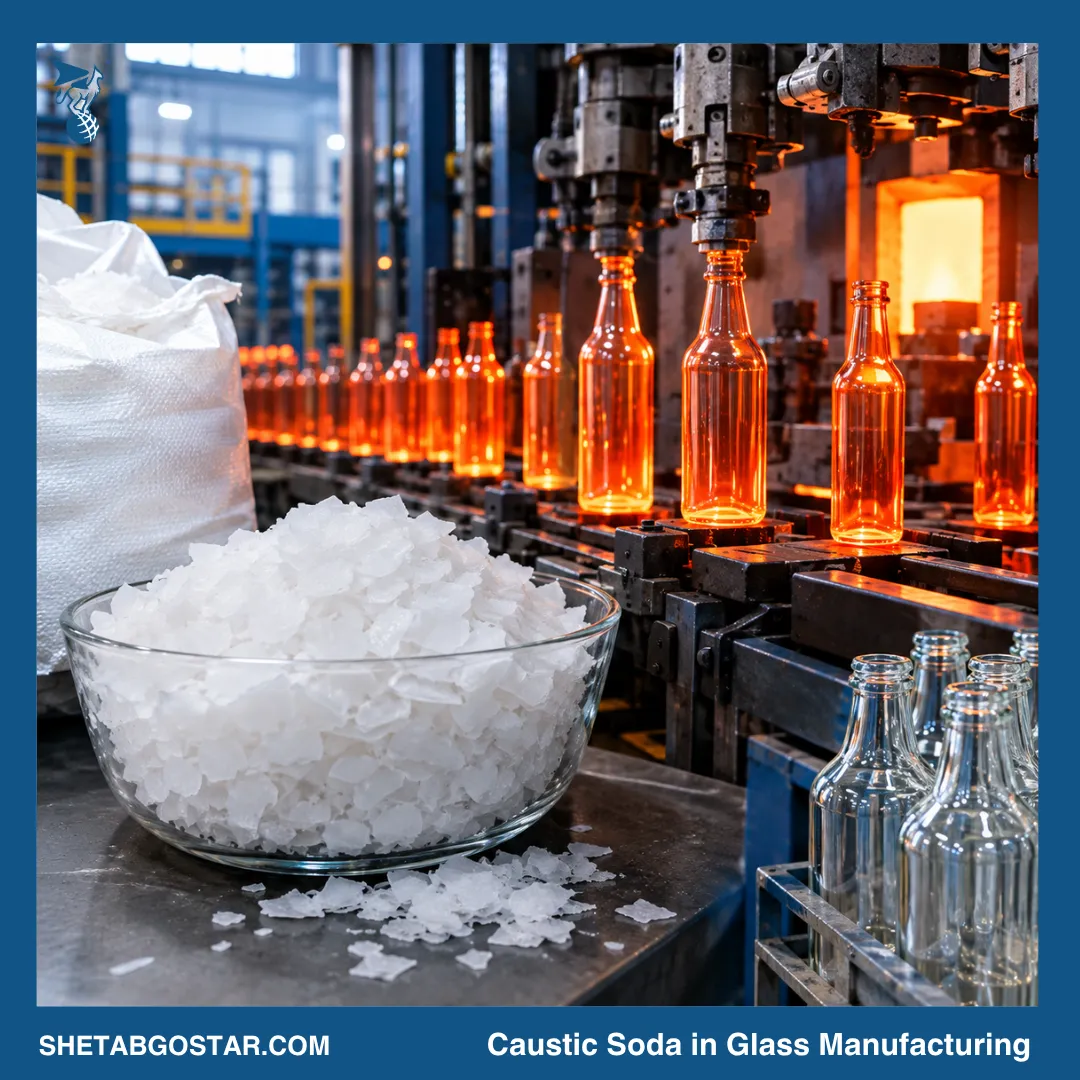
Caustic Soda in Glass Manufacturing: Uses, Applications and Chemical Processing
Caustic soda in glass manufacturing supports several important industrial operations, including equipment cleaning, surface treatment, pH adjustment, and wastewater management. Also known as sodium hydroxide (NaOH), this strong alkali helps glass manufacturers maintain efficient production processes and reliable product quality.
Although soda ash (sodium carbonate) is the primary source of sodium oxide in many conventional glass formulations, caustic soda serves valuable functions in supporting processes and selected chemical applications. Understanding these uses helps manufacturers improve operational efficiency, manage chemical consumption, and maintain consistent production standards.
What Is Caustic Soda and Why Is It Used in Glass Manufacturing?
Caustic soda is a highly alkaline, water-soluble chemical available in solid forms, such as flakes and pearls, as well as aqueous solutions. Its ability to neutralize acids, break down certain organic deposits, and control alkalinity makes it useful in various industrial operations.
In glass manufacturing, its role depends on the production method, equipment requirements, and chemical process involved. Manufacturers may use sodium hydroxide for cleaning, surface treatment, wastewater neutralization, and the production of selected chemical intermediates.
However, caustic soda does not replace soda ash in every glassmaking process. Each chemical has distinct properties and applications, so manufacturers must select the appropriate material for their specific requirements.
Key Applications of Caustic Soda in Glass Manufacturing
1. Industrial Equipment Cleaning and Degreasing
Glass production facilities use furnaces, conveyors, molds, tanks, and material-handling systems. During operation, these components may accumulate oils, organic residues, and other contaminants.
Caustic soda solutions can help remove suitable organic deposits and grease from compatible equipment. Effective cleaning reduces contamination risks and supports stable production conditions.
Manufacturers should select the concentration, temperature, and contact time according to the cleaning task. They must also verify material compatibility because sodium hydroxide can damage certain metals, coatings, and other surfaces.
2. Glass Surface Treatment and Etching
Surface treatment is another potential application of sodium hydroxide in specialized glass processing. Under controlled conditions, alkaline solutions can modify glass surfaces and assist certain cleaning or treatment operations.
However, glass composition, treatment temperature, exposure time, and chemical concentration determine the final result. Sodium hydroxide can attack silica-based materials, so uncontrolled exposure may damage the glass rather than improve its surface.
For this reason, manufacturers should validate treatment conditions before introducing the chemical into an established production line. Specialized surface-finishing requirements may also call for alternative chemicals or dedicated treatment technologies.
3. pH Adjustment in Industrial Water Systems
Glass factories use water in cooling systems, equipment cleaning, and various auxiliary operations. Some of these processes generate wastewater with changing acidity levels.
Caustic soda provides an effective method for increasing pH when acidic water requires neutralization. Accurate dosing helps operators maintain suitable operating conditions and prepare wastewater for subsequent treatment stages.
Automated pH monitoring and controlled chemical dosing can improve consistency while reducing excessive chemical consumption. Nevertheless, the required dosage depends on wastewater composition, buffering capacity, and the target pH.
4. Wastewater Treatment and Environmental Management
Glass manufacturing can generate wastewater containing suspended particles, cleaning residues, and dissolved substances. Certain streams may also contain acidic components that require treatment before discharge or reuse.
Sodium hydroxide helps neutralize acidic wastewater and adjust pH for compatible treatment processes. Depending on the contaminants present, this adjustment may support precipitation and removal of certain dissolved metals.
For a closer look at industrial pH control, explore our guide to caustic soda flakes in wastewater treatment and their role in neutralizing acidic effluents.
However, caustic soda alone does not remove every pollutant. Effective wastewater treatment may also require filtration, coagulation, sedimentation, or other technologies selected according to the wastewater analysis.
5. Production of Sodium Silicate
Sodium silicate, commonly called water glass, is an important industrial chemical used in applications such as detergents, binders, and selected specialty formulations.
One production route involves reacting silica with sodium hydroxide under suitable process conditions. A simplified representation is:
2NaOH + SiO₂ → Na₂SiO₃ + H₂O
Actual production conditions depend on the desired silicate composition, concentration, and product specifications.
Although sodium silicate has applications in glass-related and other industrial sectors, its production should be distinguished from conventional glass melting. Most standard glass formulations use established batch ingredients, including silica sand and soda ash, rather than relying directly on caustic soda as the main alkali source.
How Caustic Soda Supports Process Efficiency
When correctly selected and controlled, caustic soda can improve several supporting operations within a glass manufacturing facility.
Key operational benefits include:
- Improved equipment cleanliness: Suitable alkaline cleaning solutions help remove grease and selected organic residues.
- More consistent pH control: Accurate dosing supports stable conditions in water treatment and other compatible processes.
- Better wastewater management: Neutralization helps prepare acidic wastewater for further treatment.
- Reliable chemical processing: Controlled reaction conditions support the production of sodium silicate and other selected intermediates.
- Reduced operational interruptions: Appropriate cleaning and maintenance procedures can help prevent residue accumulation and unnecessary downtime.
These benefits depend on correct chemical selection, process monitoring, and equipment compatibility. Caustic soda should not be considered a universal solution for every glass production challenge.
Choosing the Right Caustic Soda for Glass Plants
Selecting the correct caustic soda grade is essential for consistent industrial performance. Buyers should evaluate the intended application before choosing between flakes, pearls, and liquid sodium hydroxide.
Important purchasing considerations include:
- Purity and specifications: Verify sodium hydroxide content and relevant impurity limits against the process requirements.
- Physical form: Choose solid or liquid material according to dosing systems, storage capacity, and handling procedures.
- Supply consistency: Reliable specifications and batch documentation help maintain predictable operations.
- Packaging and transportation: Packaging must protect the product from moisture and prevent leakage or contamination.
- Supplier reliability: Evaluate product documentation, delivery schedules, and the supplier’s ability to maintain consistent quality.
For glass manufacturers purchasing chemicals in bulk, total procurement cost should include transportation, storage, handling, and the operational requirements associated with the selected product form.
Safety Considerations for Industrial Use
Caustic soda is highly corrosive and can cause severe skin and eye burns. Dissolving solid sodium hydroxide in water also releases considerable heat, creating a risk of splashing.
Industrial facilities should follow established chemical-handling procedures, use suitable protective equipment, and provide appropriate ventilation and emergency washing facilities.
Operators must follow the product safety data sheet and site-specific procedures when preparing solutions. They should also confirm equipment compatibility and prevent uncontrolled chemical discharge into the environment.
Conclusion
Caustic soda in glass manufacturing plays a supporting role in industrial cleaning, selected surface treatments, pH adjustment, wastewater management, and sodium silicate production. Its value comes from its strong alkaline properties and versatility across different chemical processes.
For manufacturers, the most effective approach is to match sodium hydroxide specifications to the intended application, control dosing carefully, and maintain appropriate safety procedures. Reliable chemical sourcing and consistent quality control can further support efficient plant operations.
Looking for a reliable caustic soda supplier for industrial applications? Work with an experienced supplier to obtain suitable product specifications, dependable packaging, and supply solutions aligned with your manufacturing requirements.