Industrial Ethanol Dehydration: Methods for Removing Water from Ethanol
Industrial ethanol dehydration is essential for producing high-purity ethanol for chemical manufacturing, pharmaceuticals, laboratories, and other industrial applications. Conventional distillation can concentrate ethanol, but it cannot easily remove all remaining water because ethanol and water form an azeotrope at atmospheric pressure.
Manufacturers therefore use specialized dehydration technologies to achieve the required purity. The best method depends on the feed composition, production capacity, energy consumption, and final product specifications.
What Is Industrial Ethanol Dehydration?
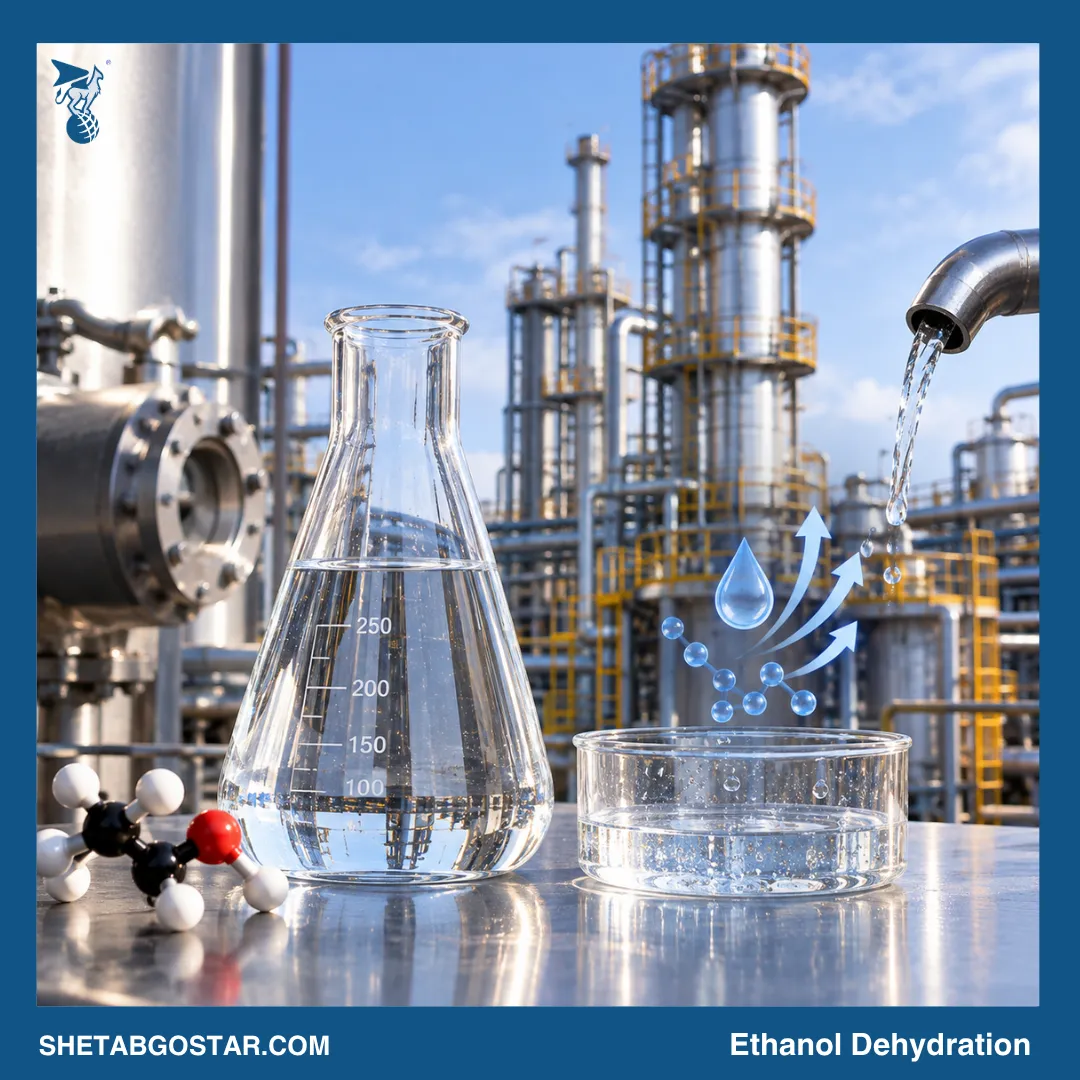
Ethanol dehydration is the process of removing residual water from an ethanol-water mixture. It typically follows conventional distillation, which produces concentrated ethanol but leaves some water in the product.
Many industrial processes require anhydrous ethanol or ethanol with a tightly controlled water content. To understand how water content affects product selection, read our guide to [Ethanol 96% vs. 99%: Which Grade Does Your Industry Need?]. Effective dehydration helps manufacturers meet these specifications and maintain consistent product quality.
1. Molecular Sieve Dehydration
Molecular sieve dehydration is one of the most widely used methods for producing anhydrous ethanol. It relies on porous materials that selectively adsorb water molecules while allowing ethanol to pass through.
In a typical system, ethanol vapor passes through a bed of molecular sieve material. The pores capture water, producing a stream with a significantly lower moisture content.
When the adsorbent becomes saturated, the system regenerates it by changing the operating pressure, temperature, or vapor conditions. Industrial plants often use multiple beds to maintain continuous production.
Key advantages:
- High ethanol purity.
- Effective water removal.
- Suitability for continuous industrial operation.
- No need for large quantities of entrainer chemicals.
However, operators must manage regeneration energy, adsorbent life, and process conditions to maintain efficiency.
2. Azeotropic and Extractive Distillation
Distillation-based dehydration methods change the separation conditions to overcome the limitations of conventional distillation.
Azeotropic distillation introduces an additional component, known as an entrainer, to alter the vapor-liquid equilibrium and help separate water from ethanol. The process then requires appropriate recovery and handling of that component.
Extractive distillation uses a selective solvent to change the relative volatility of ethanol and water. This approach can support effective separation, although solvent recovery adds complexity and energy demand.
Both methods require careful process design, particularly when product purity, operating costs, and environmental requirements are important.
3. Membrane Separation
Membrane dehydration separates water from ethanol through a selective barrier. Pervaporation is a common option in which components pass through a membrane and the permeate is removed as vapor.
This technology can reduce the water content of ethanol without relying on a conventional entrainer-based separation system. It may also operate as part of a hybrid process alongside distillation.
Membrane performance depends on selectivity, operating temperature, feed composition, and membrane durability. Manufacturers should evaluate these factors before selecting a membrane system for large-scale production.
How to Choose the Right Dehydration Method
Selecting an industrial dehydration process requires more than comparing the final purity levels. Manufacturers should evaluate several technical and commercial factors.
- Required purity: Define the maximum permitted water content and the intended ethanol application.
- Energy consumption: Compare heating, cooling, vacuum, and regeneration requirements.
- Production capacity: Match the system to the required throughput and operating schedule.
- Operating costs: Consider utilities, maintenance, adsorbent replacement, and solvent recovery.
- Product quality: Assess potential contamination and the need for additional quality-control steps.
Molecular sieves often suit continuous production of anhydrous ethanol. Membrane systems may be attractive for specialized or hybrid processes, while distillation-based alternatives can be appropriate when their separation characteristics and economics fit the application.
Quality Control After Ethanol Dehydration
Dehydration does not eliminate the need for product testing. Manufacturers should verify water content using a suitable analytical method, such as Karl Fischer titration, where appropriate.
They should also check relevant specifications for impurities, acidity, and other quality parameters. Proper sampling, storage, and moisture control help prevent water from entering the finished product during handling and transportation.
These measures support consistent quality and help buyers confirm that the ethanol meets their technical requirements.
Conclusion
Industrial ethanol dehydration enables manufacturers to achieve water specifications that conventional distillation alone cannot readily deliver. Molecular sieves, azeotropic or extractive distillation, and membrane separation each offer distinct advantages.
The most suitable technology depends on required purity, plant capacity, energy efficiency, and total operating costs. By evaluating these factors and maintaining rigorous quality control, manufacturers can improve process reliability and produce ethanol that meets demanding industrial specifications.