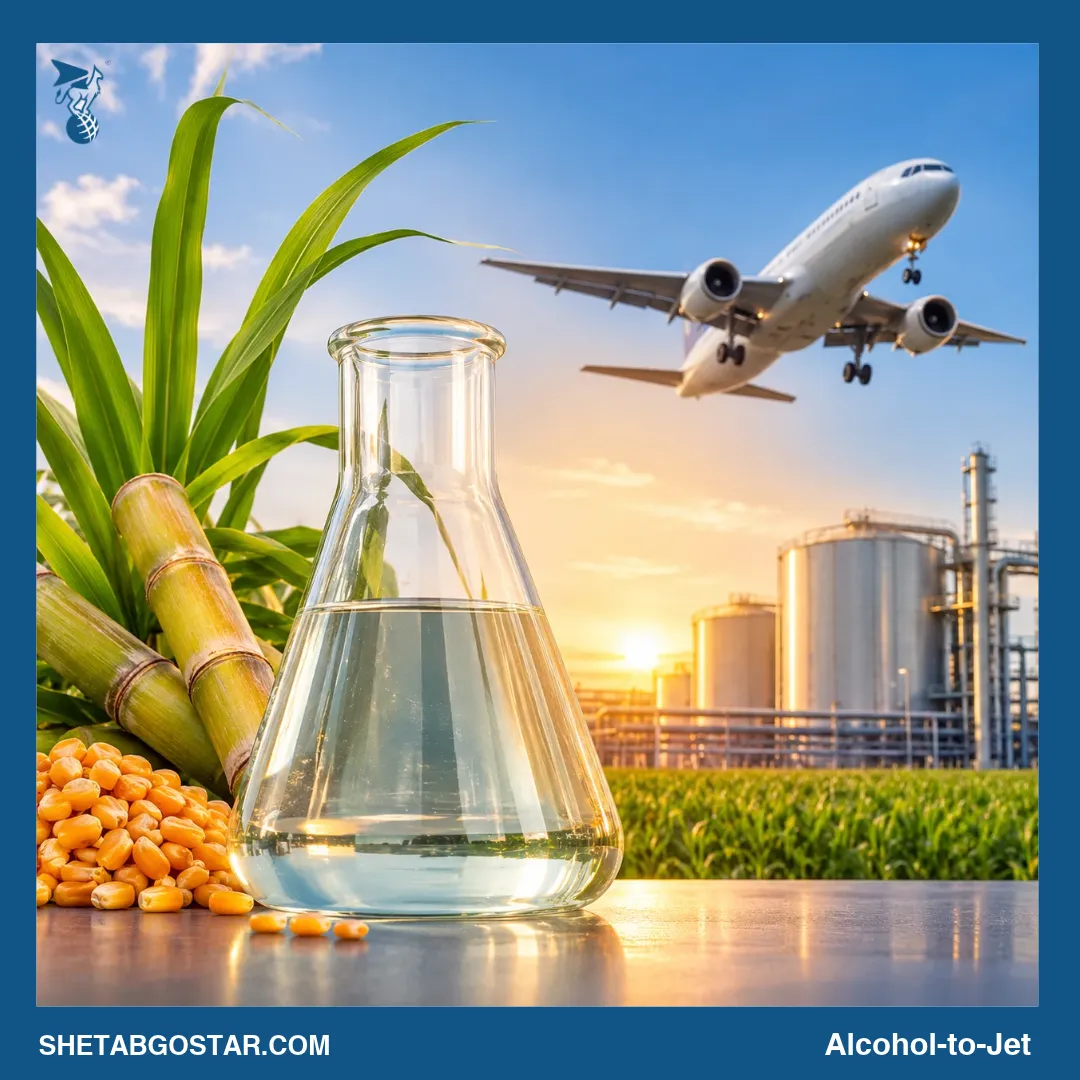
Alcohol-to-Jet (ATJ) Technology: Can Ethanol Help Scale Sustainable Aviation Fuel Production?
Introduction
The aviation industry needs cleaner energy solutions to reduce greenhouse gas emissions and support long-term sustainability. Sustainable Aviation Fuel (SAF) offers one of the most promising ways to achieve this goal because airlines can use approved SAF blends in existing aircraft and fuel infrastructure.
Among the available production pathways, Alcohol-to-Jet (ATJ) technology offers significant potential for expanding sustainable aviation fuel production. This technology converts renewable alcohols, including ethanol, into hydrocarbon fuels that meet aviation requirements.
Ethanol has several advantages as an industrial feedstock. Producers already manufacture it on a large scale, and many countries have established ethanol production facilities and distribution networks. These advantages could help the aviation industry expand SAF production without building an entirely new alcohol supply chain.
This article explores how ATJ technology works, why ethanol offers an attractive feedstock, and which technical and economic challenges could affect its commercial growth.
1. What Is Alcohol-to-Jet (ATJ) Technology?
Alcohol-to-Jet is a chemical conversion process that transforms renewable alcohols into synthetic aviation fuel components.
The technology uses alcohol molecules as the starting material and upgrades them through several catalytic reactions. Ethanol and isobutanol represent two important feedstocks for this production pathway.
Unlike conventional ethanol applications, ATJ technology converts alcohol into longer-chain hydrocarbons that offer the properties required for aviation fuel.
Manufacturers can obtain renewable ethanol from several feedstock sources, including:
- Sugarcane and sugar beet
- Corn and other starch-based crops
- Agricultural residues
- Forestry waste
- Lignocellulosic biomass
These feedstocks provide different opportunities for industrial development. For example, agricultural residues can support second-generation ethanol production and reduce dependence on food-based raw materials.
By connecting renewable alcohol production with advanced chemical processing, ATJ technology creates another industrial market for ethanol manufacturers.
2. How Does Ethanol-to-Jet Conversion Work?
Ethanol-to-Jet (ETJ) represents a specific pathway within Alcohol-to-Jet technology. This process converts ethanol into aviation-range hydrocarbons through four main stages.
Step 1: Ethanol Dehydration
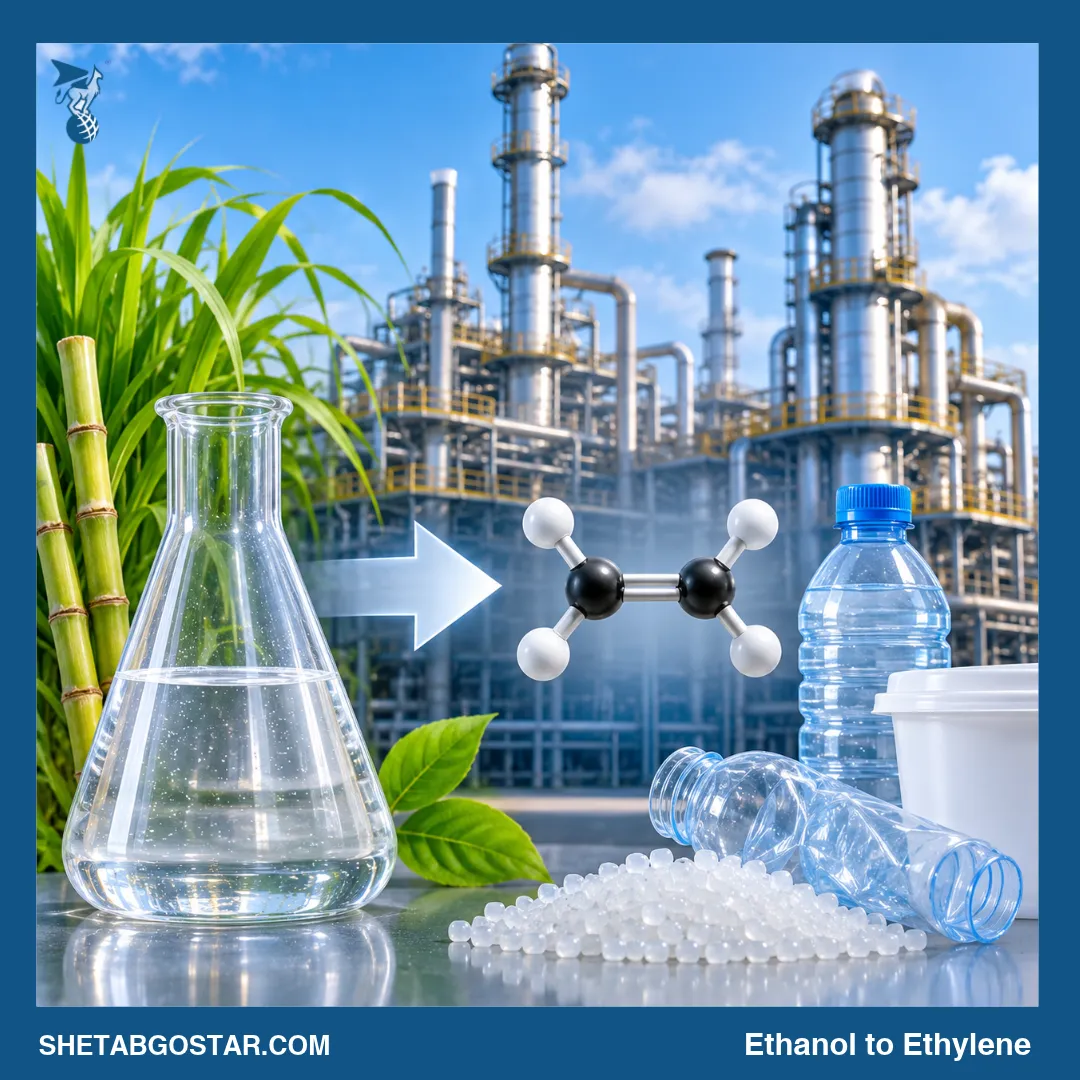
The first stage converts ethanol into ethylene through catalytic dehydration.
During this reaction, a catalyst helps remove water from the ethanol molecule and produces ethylene.
The chemical reaction follows this equation:
C₂H₅OH → C₂H₄ + H₂O
Ethylene serves as the primary intermediate for the next production stage. Catalyst performance, operating temperature, and reaction conditions influence conversion efficiency and product quality.
Step 2: Ethylene Oligomerization
The second stage combines smaller ethylene molecules to create longer hydrocarbon chains.
Catalytic oligomerization increases molecular size and generates olefins with different carbon numbers.
The process aims to produce hydrocarbons within the range required for aviation fuel, particularly molecules that can form kerosene-range products.
Catalyst selection plays an important role in this stage because it influences product distribution, selectivity, and overall process efficiency.
Step 3: Hydrogenation
After oligomerization, hydrogenation converts unsaturated hydrocarbons into more stable paraffinic molecules.
The reaction adds hydrogen to carbon-carbon double bonds and improves the chemical stability of the hydrocarbon mixture.
Hydrogen consumption and catalyst performance directly affect operating costs and production efficiency.
Producers can also improve the environmental performance of this stage by using hydrogen from renewable or other low-carbon sources.
Step 4: Fractionation and Fuel Upgrading
The final stage separates the hydrocarbon mixture into different fractions.
Fractionation uses differences in boiling points to separate aviation-range hydrocarbons from lighter and heavier products.
The process produces an ATJ synthetic paraffinic kerosene component, which manufacturers can blend with conventional jet fuel according to applicable aviation fuel specifications.
Together, these four stages transform renewable ethanol into a valuable feedstock for sustainable aviation fuel production.
3. Why Is Ethanol a Promising Feedstock for SAF Production?
Ethanol offers several advantages that could support the commercial expansion of ATJ technology.
Established Industrial Infrastructure
Many countries already operate large ethanol production facilities. These facilities use established fermentation processes, storage systems, transportation networks, and quality-control procedures.
This industrial foundation can help ATJ developers secure ethanol supplies and reduce some infrastructure requirements.
Furthermore, existing ethanol producers may explore partnerships with SAF manufacturers to enter the growing aviation fuel market.
Feedstock Flexibility
Ethanol manufacturers can use several renewable raw materials to produce alcohol.
First-generation ethanol production relies mainly on sugar- and starch-based crops. In contrast, second-generation ethanol production uses agricultural residues, forestry waste, and other lignocellulosic materials.
This flexibility creates opportunities to diversify raw material supplies and improve the environmental performance of ethanol production.
For a broader understanding of ethanol’s role in renewable energy, read our article on Ethanol 96% as a Biofuel in a Carbon-Constrained World, which explores its potential as an alternative to conventional fossil fuels.
Integration with Existing Aviation Infrastructure
ATJ technology offers another important advantage: it can produce synthetic fuel components that work with conventional aviation fuel systems after manufacturers meet the relevant specifications and blending requirements.
Airlines can use approved SAF blends without introducing entirely new aircraft engine technologies.
This compatibility can reduce infrastructure costs and simplify the transition toward cleaner aviation fuels.
Potential for Lower Lifecycle Emissions
Ethanol-based SAF can reduce lifecycle greenhouse gas emissions compared with conventional petroleum-derived jet fuel.
However, the actual reduction depends on several factors, including feedstock selection, agricultural practices, transportation distances, production energy, hydrogen sources, and conversion efficiency.
Producers can improve the environmental performance of ATJ technology by selecting sustainable feedstocks, optimizing energy consumption, and using low-carbon hydrogen.
4. Technical and Economic Challenges of ATJ Technology
Although ATJ technology offers significant opportunities, several challenges still affect its commercial expansion.
High Capital Investment
An industrial ATJ facility requires specialized equipment, including catalytic reactors, hydrogenation units, separation systems, and distillation columns.
These systems require substantial investment, especially when a company builds a new production facility.
However, integration with an existing ethanol plant may reduce certain infrastructure costs and improve resource utilization.
Investors must evaluate plant capacity, equipment costs, financing conditions, and expected fuel prices before developing a commercial project.
Hydrogen Consumption
The hydrogenation stage requires a reliable hydrogen supply.
Producers often face additional costs when they use conventional hydrogen production methods that rely on fossil fuels.
Renewable hydrogen can improve the environmental performance of ATJ facilities, although its production cost and availability remain important economic considerations.
Catalyst Efficiency and Performance
Catalysts influence the performance of dehydration, oligomerization, and hydrogenation reactions.
Their activity, selectivity, durability, and resistance to impurities directly affect production costs and fuel yields.
Researchers and industrial companies continue to explore improved catalyst systems that can increase conversion efficiency and reduce maintenance requirements.
Better catalyst performance could help ATJ facilities achieve more competitive production economics.
Feedstock Availability
Large-scale ATJ production requires a consistent supply of suitable ethanol.
However, ethanol producers also serve other markets, including gasoline blending, chemical manufacturing, and industrial applications.
This competition can influence ethanol prices and supply availability.
Furthermore, second-generation ethanol production requires efficient systems for collecting, transporting, and processing agricultural and forestry residues.
Companies must address these supply-chain challenges before they can expand ATJ production on a large scale.
5. Environmental Benefits and Lifecycle Assessment
A complete lifecycle assessment (LCA) helps determine the environmental performance of ethanol-based aviation fuel.
This approach examines greenhouse gas emissions and resource consumption throughout the production chain, from raw material extraction or cultivation to final fuel consumption.
Several factors influence the results.
- Feedstock selection: Sustainable agricultural practices and lignocellulosic feedstocks can improve environmental performance.
- Energy efficiency: Efficient production systems can reduce electricity and heat consumption.
- Hydrogen sourcing: Renewable hydrogen can lower emissions from the fuel-upgrading process.
- Transportation logistics: Efficient transportation systems can reduce fuel consumption and supply-chain emissions.
- Waste utilization: Producers can improve resource efficiency by using valuable process by-products.
The origin of ethanol alone does not determine the sustainability of the final aviation fuel. Producers must evaluate the entire production pathway to understand its actual environmental impact.
For ethanol manufacturers, improvements in fermentation efficiency, energy recovery, and waste management can strengthen their position in the sustainable aviation fuel market.
6. ASTM Standards and Commercial Applications
Aviation fuel requires strict quality control because aircraft engines depend on consistent fuel properties and performance.
ASTM International develops technical specifications that help manufacturers qualify synthetic aviation fuel components and establish appropriate blending requirements.
The ASTM D7566 specification includes the Alcohol-to-Jet Synthetic Paraffinic Kerosene pathway under Annex A5.
This pathway covers the conversion of approved alcohol feedstocks into synthetic paraffinic kerosene through chemical processing.
Under the applicable requirements, manufacturers can blend ATJ-SPK with conventional petroleum-based jet fuel at a maximum ratio of 50% by volume. The final blend must also meet the relevant fuel specifications.
This standard creates an important commercial opportunity for ethanol producers because it connects renewable alcohol production with an established aviation fuel qualification framework.
Companies can now explore partnerships between ethanol manufacturing facilities and advanced fuel conversion plants to develop integrated production systems.
7. Can ATJ Technology Help Scale Sustainable Aviation Fuel Production?
Alcohol-to-Jet technology has several characteristics that could support the expansion of sustainable aviation fuel production.
First, the technology can use an established ethanol industry as its feedstock supply base. This advantage could reduce the time and investment required to develop new renewable alcohol production capacity.
Second, ethanol offers several feedstock options. Producers can use sugar crops, starch-based materials, and lignocellulosic biomass to diversify their supply chains.
Third, ATJ technology relies on established chemical conversion operations. Industrial companies can improve these processes through catalyst development, energy integration, and equipment optimization.
Nevertheless, commercial expansion requires more than technical progress.
SAF producers must secure reliable supplies of sustainable ethanol, control hydrogen costs, improve conversion yields, and reduce capital expenditure.
Government policies and financial incentives can also support industrial investment. In addition, long-term purchasing agreements between airlines and SAF manufacturers can create stronger market demand.
The aviation industry will likely need several complementary SAF pathways to meet its long-term sustainability goals. ATJ technology can contribute to this strategy by connecting renewable alcohol production with aviation fuel manufacturing.
Conclusion
Alcohol-to-Jet technology creates an important opportunity for the ethanol industry to enter the sustainable aviation fuel market.
Through dehydration, oligomerization, hydrogenation, and fractionation, producers can convert renewable ethanol into synthetic paraffinic kerosene suitable for approved aviation fuel blends.
The technology benefits from existing ethanol infrastructure, flexible feedstock options, and an established ASTM qualification pathway. However, producers must address capital investment, hydrogen consumption, catalyst performance, and feedstock availability to achieve large-scale commercial production.
For ethanol manufacturers and exporters, ATJ technology could open new industrial markets and diversify the applications of ethanol.
As airlines and fuel producers seek lower-carbon alternatives, ethanol may play an increasingly important role in the future of sustainable aviation fuel.