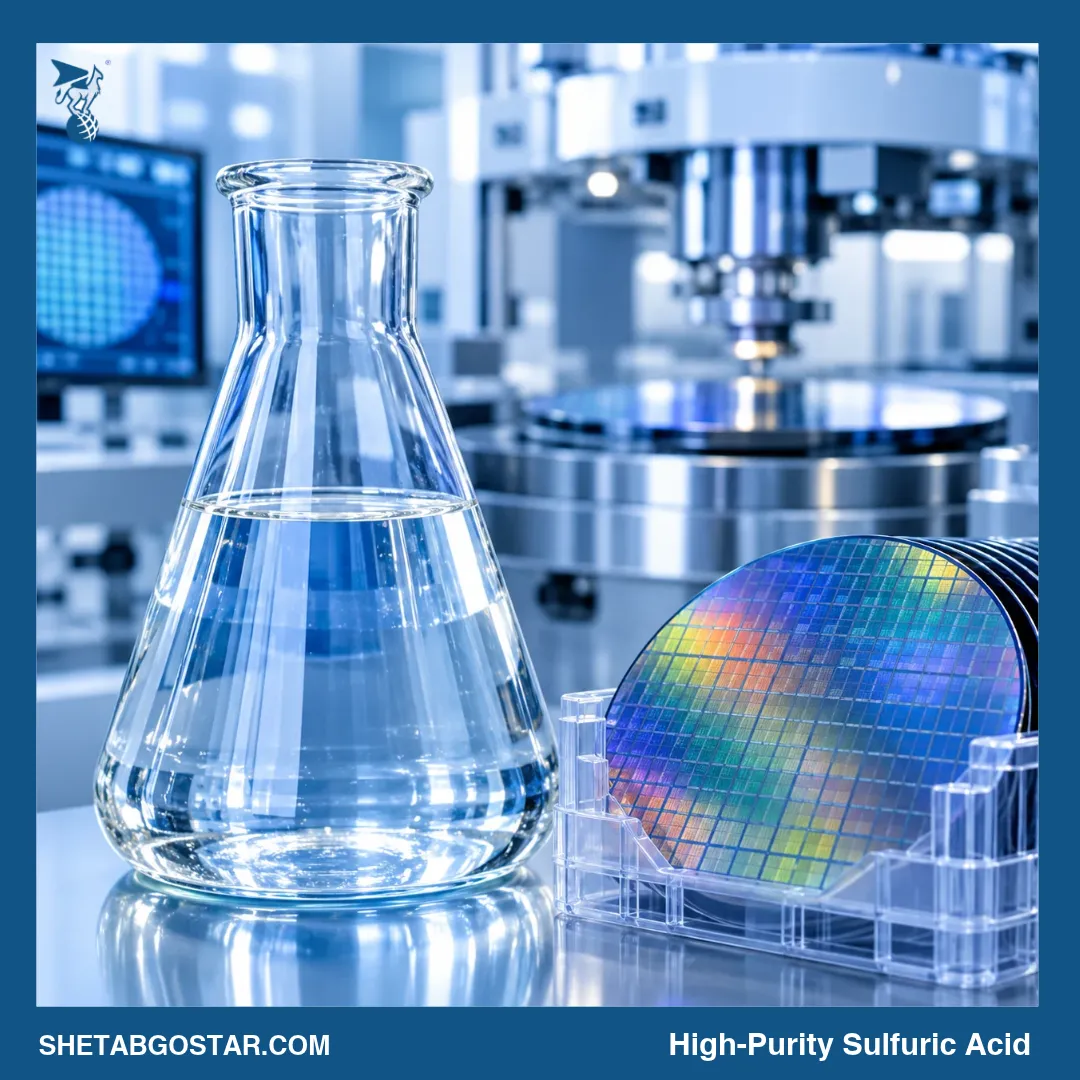
High-Purity Sulfuric Acid in Semiconductor Manufacturing: Specifications, Contamination Control and Supply
Introduction
The semiconductor industry depends on highly controlled chemical materials to manufacture advanced electronic components. Among these materials, High-Purity Sulfuric Acid plays an important role in wafer cleaning and surface preparation. Even extremely small amounts of contamination can affect semiconductor performance, production efficiency, and final product quality.
Unlike conventional industrial sulfuric acid, semiconductor-grade products require strict control over metallic impurities, particles, and other unwanted substances. Therefore, manufacturers must focus on chemical specifications, contamination prevention, and reliable supply systems when selecting sulfuric acid for semiconductor applications.
1. Why High-Purity Sulfuric Acid Matters in Semiconductor Manufacturing
Semiconductor production involves several stages of wafer processing. During these operations, silicon wafers may collect organic residues, particles, and other surface contaminants. These impurities can interfere with subsequent manufacturing steps and reduce production yields.
High-Purity Sulfuric Acid is widely used in wafer cleaning processes because of its strong chemical and oxidizing properties. In particular, it is an important component of the sulfuric acid and hydrogen peroxide mixture, commonly known as SPM.
This cleaning mixture helps remove photoresist residues and organic contamination from wafer surfaces. As a result, it supports cleaner surfaces and more consistent semiconductor processing.
The effectiveness of this process depends not only on acid concentration but also on the control of trace impurities.
2. Key Specifications of High-Purity Sulfuric Acid
Semiconductor manufacturers require sulfuric acid with carefully defined chemical and physical properties. Standard industrial specifications are not sufficient for applications that demand extremely low contamination levels.
The most important quality parameters include:
Sulfuric Acid Concentration
Concentration is a fundamental parameter in semiconductor-grade sulfuric acid. Products with a concentration around 96% are commonly used in semiconductor cleaning applications. However, the exact concentration range depends on the manufacturing process and customer requirements.
Metallic Impurities
Trace metals such as iron, sodium, potassium, copper, nickel, and calcium can contaminate wafer surfaces. Even very low concentrations may affect sensitive manufacturing processes.
For this reason, suppliers must monitor metallic impurities at parts-per-billion (ppb) levels or lower, depending on the required purity grade.
Particle Content
Undissolved particles can settle on wafer surfaces and create defects during processing. High-purity sulfuric acid must therefore meet strict particle-control requirements.
Other Chemical Impurities
Chloride, nitrate, organic residues, and other unwanted substances may also influence cleaning performance. Regular testing helps manufacturers verify that the acid meets the required specifications.
The SEMI C44 standard provides an important technical reference for sulfuric acid grades and purity requirements used in the semiconductor industry.
3. Contamination Control During Production and Handling
Producing high-purity sulfuric acid requires more than selecting high-quality raw materials. Every stage of production, storage, and transportation must prevent contamination.
Several measures help maintain product quality:
- Controlled production: Manufacturers must carefully monitor production conditions and purification processes to minimize unwanted impurities.
- Advanced filtration: Suitable filtration systems help reduce suspended particles and maintain product cleanliness.
- Clean storage equipment: Tanks, pipelines, valves, and transfer systems must use compatible materials that do not introduce additional contaminants.
- Contamination-free sampling: Proper sampling procedures help ensure that laboratory results accurately represent the supplied product.
- Regular laboratory testing: Advanced analytical methods help identify trace metals and other impurities before product release.
These practices reduce contamination risks and help maintain consistent product quality between different production batches.
4. Packaging and Transportation Requirements
Packaging and transportation are important parts of the semiconductor chemical supply chain. Even when sulfuric acid meets the required specifications at the production stage, unsuitable containers or poorly controlled transportation conditions may compromise its purity.
Suppliers should select chemically compatible packaging and storage systems based on product concentration, purity requirements, and transportation conditions.
For larger industrial shipments, dedicated tank systems may be appropriate. However, semiconductor-grade products require additional controls over tank cleanliness, filling equipment, transfer operations, and handling procedures.
Furthermore, suppliers should maintain clear documentation for each shipment, including:
- Certificate of Analysis (CoA)
- Safety Data Sheet (SDS)
- Product concentration and purity specifications
- Batch identification and traceability
- Packaging and transportation information
Proper documentation allows semiconductor manufacturers to verify product quality and maintain consistent purchasing standards.
5. How to Select a Reliable Sulfuric Acid Supplier
Choosing the right supplier is essential for maintaining stable semiconductor production. Buyers should evaluate more than the advertised purity level or product price.
When evaluating suppliers, semiconductor manufacturers should carefully review product purity, impurity limits, quality documentation, and batch consistency. Understanding the key factors in choosing a reliable sulfuric acid supplier can help buyers make better procurement decisions.
The following factors deserve particular attention:
- Verified product specifications: Suppliers should provide detailed technical data and demonstrate compliance with the required purity grade.
- Consistent product quality: Batch-to-batch consistency is essential for preventing unexpected changes in manufacturing performance.
- Reliable analytical capabilities: Suppliers should use suitable laboratory methods to measure trace impurities and particles.
- Controlled logistics: Proper packaging, transportation, and storage procedures help protect product quality throughout the supply chain.
- Stable supply capacity: Manufacturers need dependable deliveries to avoid production interruptions and unexpected procurement costs.
A qualified supplier should also understand the customer’s technical requirements and provide documentation before commercial approval.
6. The Future of High-Purity Sulfuric Acid Supply
As semiconductor technology advances, manufacturers continue to demand chemicals with higher purity and more consistent quality. Smaller device structures and increasingly sensitive production processes make contamination control even more important.
This trend creates new opportunities for chemical producers that can invest in advanced purification technologies, analytical equipment, and specialized logistics systems.
At the same time, supply chain reliability remains a major consideration. Semiconductor manufacturers need suppliers that can maintain stable quality, provide traceable products, and support long-term production requirements.
Therefore, the future of High-Purity Sulfuric Acid supply will depend on a combination of advanced purification, strict quality assurance, and reliable distribution.
Conclusion
High-Purity Sulfuric Acid is an essential chemical in semiconductor wafer cleaning and surface preparation. Its effectiveness depends on accurate concentration control, extremely low impurity levels, and careful contamination management throughout production and distribution.
For semiconductor manufacturers, selecting a reliable supplier requires a detailed evaluation of technical specifications, analytical capabilities, packaging standards, and supply consistency. By maintaining these quality requirements, manufacturers can reduce contamination risks and support more efficient semiconductor production.
Looking for a reliable sulfuric acid supplier? Contact our sales team to learn more about our sulfuric acid products, request a price quotation, and obtain product specifications and a Certificate of Analysis for your industrial requirements.