Ethanol-to-Ethylene Conversion: Industrial Applications, Process Economics and Bio-Based Plastics
The chemical industry is increasingly exploring renewable feedstocks to reduce its dependence on fossil fuels. One important example is ethanol to ethylene conversion, a process that transforms ethanol into ethylene, a key building block for many industrial chemicals and plastics.
Traditionally, manufacturers have produced ethylene through steam cracking of petroleum-based feedstocks such as naphtha and ethane. However, ethanol dehydration offers an alternative route, particularly when producers use bio-based ethanol made from renewable agricultural materials.
This technology connects the ethanol industry with the growing market for sustainable plastics and chemicals. It also creates new opportunities for ethanol producers, chemical manufacturers, and businesses seeking more environmentally responsible production methods.
1. How Does Ethanol-to-Ethylene Conversion Work?
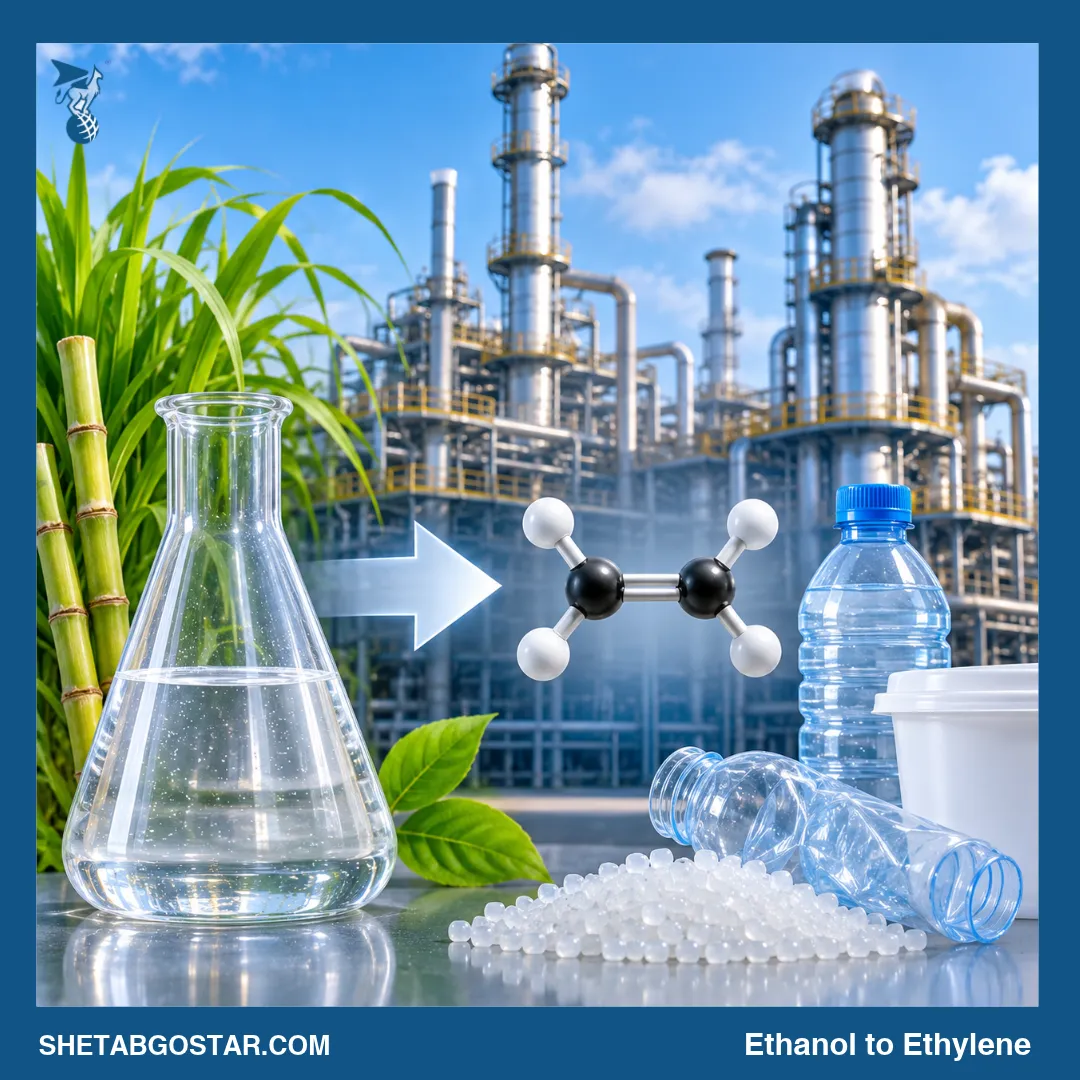
Ethanol-to-ethylene conversion takes place through a chemical reaction known as dehydration. During this process, ethanol molecules lose water and form ethylene.
The reaction can be represented by the following equation:
C₂H₅OH → C₂H₄ + H₂O
Industrial producers typically carry out this reaction at elevated temperatures using suitable catalysts. Alumina-based catalysts and certain zeolite materials can support the dehydration process.
Several operating conditions influence production performance, including:
- Reaction temperature and pressure
- Catalyst activity and selectivity
- Ethanol purity and feedstock quality
- Water content in the feed
- Residence time and reactor design
Careful control of these parameters helps manufacturers improve ethylene yield and reduce unwanted by-products.
2. Industrial Applications of Ethylene
Ethylene is one of the most important raw materials in the petrochemical industry. It serves as a starting material for numerous chemicals and polymer products.
Polyethylene Production
Polyethylene is widely used in packaging films, plastic containers, pipes, agricultural films, and industrial products. Ethylene polymerization produces different polyethylene grades, including HDPE, LDPE, and LLDPE.
Ethylene Oxide and Ethylene Glycol
Manufacturers use ethylene to produce ethylene oxide, which serves as an intermediate in several chemical processes. Ethylene glycol, derived from ethylene oxide, is widely used in polyester fibers, PET packaging, and antifreeze formulations.
Other Industrial Chemicals
Ethylene also supports the production of important chemicals such as ethylbenzene and vinyl chloride intermediates. These materials contribute to plastics, synthetic fibers, coatings, and other industrial applications.
Therefore, ethanol-based ethylene production can serve several established industrial markets.
3. Process Economics: What Determines Production Costs?
Although ethanol dehydration offers an alternative to conventional ethylene production, its economic performance depends on several factors.
Ethanol Feedstock Price
Feedstock costs represent a major part of total production expenses. Therefore, access to competitively priced ethanol is essential for economic operation. Bio-based ethanol prices can vary depending on agricultural availability, production technology, and regional supply conditions.
Energy Consumption
The dehydration reaction requires heating. Consequently, energy efficiency, heat recovery, and reactor optimization can significantly influence operating costs.
Catalyst Performance
Catalysts affect conversion rates, product selectivity, and maintenance requirements. A catalyst with a longer operating life can reduce replacement expenses and improve production efficiency.
Plant Capacity and Infrastructure
Large-scale facilities may benefit from economies of scale. However, investment costs, transportation infrastructure, storage facilities, and access to downstream customers also influence profitability.
Ultimately, manufacturers must compare the total production cost of ethanol-based ethylene with conventional production routes. This comparison should include feedstock expenses, energy requirements, capital investment, and environmental compliance costs.
4. The Role of Ethanol in Bio-Based Plastics
One of the most promising opportunities for ethanol-to-ethylene technology is the production of bio-based plastics.
When manufacturers use renewable ethanol, they can produce bio-based ethylene. This ethylene can then enter conventional polymerization processes to manufacture polyethylene.
For a broader understanding of ethanol’s renewable applications, read our article on Ethanol 96% as a sustainable biofuel and its role in reducing dependence on fossil fuels.
Importantly, bio-based polyethylene can have the same chemical structure and many of the same performance properties as conventional polyethylene. As a result, it can be used in existing applications without necessarily requiring major changes to processing equipment.
Key applications of bio-based polyethylene include:
- Flexible packaging and shopping bags
- Food and beverage packaging
- Agricultural films
- Household containers
- Industrial packaging materials
However, bio-based plastics are not automatically biodegradable. Bio-based polyethylene generally has the same non-biodegradable characteristics as fossil-based polyethylene. Its main advantage is the renewable origin of its carbon feedstock.
5. Environmental Benefits and Production Challenges
Ethanol-based ethylene production can help diversify the chemical industry’s feedstock sources. When manufacturers use sustainably produced bioethanol, they can reduce dependence on fossil-based raw materials.
Nevertheless, its environmental performance depends on the entire production chain.
Agricultural practices, land use, fertilizer consumption, water requirements, transportation, and energy sources all influence the final carbon footprint.
Manufacturers should also consider several technical and commercial challenges:
- Fluctuating ethanol prices and feedstock availability
- High-temperature energy requirements
- Catalyst deactivation and replacement
- Competition with conventional ethylene production
- Requirements for sustainable feedstock certification
A comprehensive life-cycle assessment can help companies evaluate whether ethanol-based ethylene delivers meaningful environmental improvements.
6. Future Outlook for Ethanol-to-Ethylene Technology
Demand for renewable chemicals and sustainable materials is encouraging manufacturers to explore alternative production technologies. Ethanol dehydration provides a practical connection between renewable alcohol production and the established petrochemical industry.
As catalyst technologies improve and renewable ethanol becomes more accessible, this production route may become increasingly attractive in selected markets.
In addition, growing interest in bio-based polyethylene could create new opportunities for ethanol producers and chemical exporters. Companies that can provide consistent ethanol quality, reliable supply, and competitive pricing may benefit from this developing market.
Conclusion
Ethanol-to-ethylene conversion represents an important pathway for linking renewable feedstocks with the global chemical and plastics industries. Through catalytic dehydration, manufacturers can transform ethanol into ethylene and use it to produce polyethylene and other valuable chemicals.
Although feedstock prices, energy consumption, and production efficiency remain important economic considerations, this technology offers opportunities for developing bio-based plastics and diversifying industrial raw materials.
Ethanol Global supplies ethanol for industrial applications and supports businesses seeking reliable feedstock solutions. Contact our team to discuss ethanol specifications, product availability, and export inquiries.