Hydrochloric Acid in Oil Well Acidizing: Formation Compatibility, Reaction Control and Treatment Design
Introduction
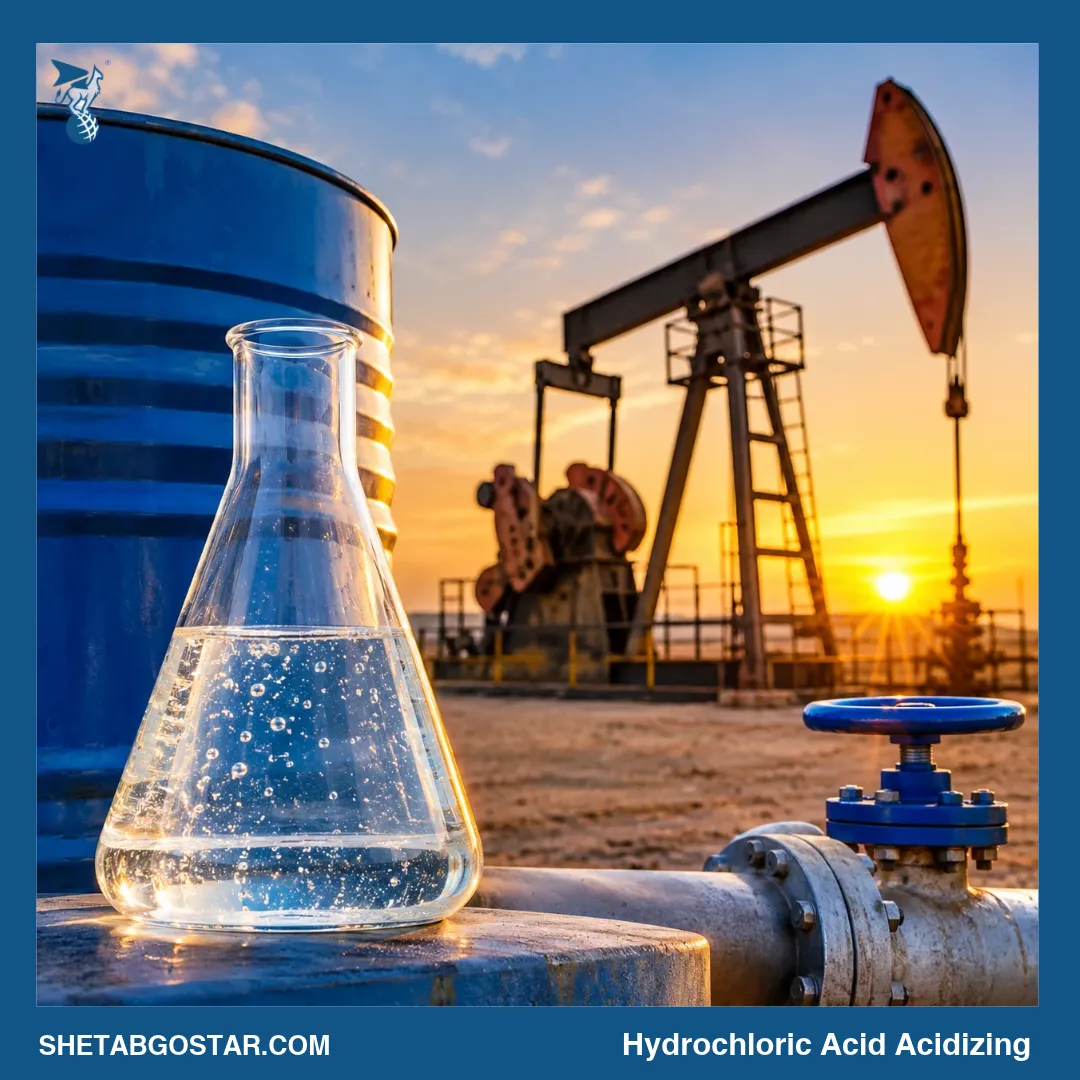
Hydrochloric acid acidizing is an important technique in the oil and gas industry for improving well productivity. This treatment helps remove formation damage, dissolve carbonate minerals, and improve the flow of oil and gas through reservoir rocks.
During oil production, mineral deposits, drilling fluids, and other materials can block formation pores and restrict fluid movement. As a result, well productivity may decrease over time. Acidizing treatments address these problems by introducing carefully selected acid systems into the reservoir.
Hydrochloric acid (HCl) is widely used in carbonate formations because it reacts effectively with minerals such as calcite and dolomite. However, successful treatment requires more than selecting an acid concentration. Engineers must also evaluate formation compatibility, reaction rates, corrosion risks, and treatment conditions.
This article explains the role of hydrochloric acid in oil well acidizing and examines the main factors involved in designing an effective treatment.
1. Understanding Hydrochloric Acid Acidizing
Hydrochloric acid acidizing is a well stimulation method that uses an HCl-based fluid to dissolve unwanted materials and improve formation permeability.
Hydrochloric acid is also widely used in oilfield services and other industrial applications, as discussed in our article on [hydrochloric acid exports from Iran].
There are two main types of acidizing operations:
Matrix Acidizing
Matrix acidizing involves injecting acid into the formation at a pressure below the formation fracture pressure. The acid enters the existing pore structure and reacts with minerals or deposits that restrict fluid flow.
In carbonate reservoirs, HCl dissolves formation minerals and can create conductive channels known as wormholes. These channels provide additional pathways for reservoir fluids to reach the wellbore.
Acid Fracturing
Acid fracturing involves injecting acid at a pressure high enough to create or extend fractures in suitable carbonate formations. The acid reacts with the fracture surfaces and produces irregular channels that can remain conductive after the fracture closes.
Although both methods use acid-based fluids, their treatment objectives, pumping conditions, and fluid requirements are different.
2. Formation Compatibility and Mineral Composition
Formation compatibility is one of the most important considerations in hydrochloric acid acidizing. Before selecting an acid system, engineers need to understand the mineral composition of the reservoir.
Different formation types respond differently to hydrochloric acid.
Carbonate Formations
Carbonate reservoirs commonly contain limestone and dolomite. These minerals react with hydrochloric acid and produce soluble chloride salts, water, and carbon dioxide.
For example, the reaction between HCl and calcite can be represented as:
CaCO3 + 2HCl → CaCl2 + CO2 + H2O
This reaction dissolves calcite and helps remove materials that restrict fluid movement.
However, the reaction rate can be very high, especially at elevated reservoir temperatures. Therefore, engineers must consider acid penetration, injection rate, and treatment volume.
Sandstone Formations
Sandstone reservoirs require a different approach. Hydrochloric acid alone cannot effectively dissolve the main silicate minerals found in sandstone.
In these formations, HCl is sometimes combined with hydrofluoric acid (HF) as part of a carefully designed acid system. Hydrochloric acid helps dissolve carbonate materials and maintain an acidic environment, while HF reacts with certain silicate minerals.
However, incorrect acid selection can cause secondary reactions and precipitation. These deposits may reduce permeability instead of improving it.
Therefore, detailed mineralogical analysis is essential before selecting an acid treatment.
3. Reaction Control During Acidizing Operations
Reaction control is another major factor in successful hydrochloric acid acidizing.
HCl reacts rapidly with carbonate minerals. If the acid is consumed too close to the wellbore, it may not reach deeper damaged sections of the formation.
Several factors influence the reaction rate.
Reservoir Temperature
Higher temperatures generally accelerate the reaction between hydrochloric acid and carbonate minerals. Consequently, acid may become spent before reaching the intended treatment zone.
Engineers may consider reaction-rate-modified acid systems or alternative acid formulations when conventional HCl reacts too quickly.
Acid Concentration
Acid concentration affects both dissolution capacity and reaction behavior. Higher concentrations may increase the amount of carbonate dissolved, but they can also increase corrosion risks and treatment costs.
Therefore, selecting an appropriate concentration requires laboratory testing and reservoir evaluation.
Injection Rate
Injection rate influences how quickly acid moves through the formation and how much time it has to react with the rock.
An appropriate injection rate can improve acid distribution and support the development of effective wormhole structures in carbonate reservoirs.
Reaction-Rate Modification
In some applications, conventional hydrochloric acid reacts too quickly to penetrate the desired formation interval.
Reaction-rate-modified acid systems can help control the reaction rate and improve acid penetration. These systems may use chemical additives, emulsions, or other specialized formulations depending on reservoir conditions.
4. Important Additives in Hydrochloric Acid Treatments
Hydrochloric acid treatments commonly require additional chemicals to control unwanted reactions and protect well equipment.
The selection of additives depends on the formation, temperature, acid concentration, and treatment objectives.
Important additives include:
- Corrosion Inhibitors: These chemicals reduce the corrosive effect of HCl on steel tubing, casing, and pumping equipment.
- Iron Control Agents: These additives help keep dissolved iron in solution and reduce the risk of iron-related precipitation.
- Surfactants: Surfactants improve fluid behavior and can help reduce undesirable emulsion formation.
- Non-Emulsifiers: These products help prevent stable oil-water emulsions that may restrict formation flow.
- Mutual Solvents: These chemicals can improve fluid compatibility and help remove certain organic residues.
- Diverting Agents: These materials help distribute acid across different formation intervals instead of allowing most of the fluid to enter highly permeable zones.
Importantly, additives must be tested together with the acid and formation fluids. Incompatible chemicals may cause precipitation, sludge formation, or other operational problems.
5. Designing an Effective Oil Well Acidizing Treatment
A successful acidizing treatment requires a systematic engineering approach. Simply increasing acid concentration or pumping more fluid does not guarantee better results.
Engineers should evaluate several parameters before starting an operation.
Formation Evaluation
The first step is to identify the reservoir type, mineral composition, permeability, porosity, and existing formation damage.
Core analysis and mineralogical testing can provide useful information about the interaction between the acid and reservoir rock.
Laboratory Compatibility Testing
Laboratory testing helps identify possible problems before field application.
Typical tests evaluate:
- Acid-rock dissolution performance
- Compatibility between acid and formation water
- Precipitation and sludge formation
- Emulsion tendency
- Corrosion behavior
- Additive compatibility
These tests help engineers select a suitable acid formulation and reduce the risk of treatment failure.
Treatment Volume and Concentration
The required acid volume depends on the damaged interval, reservoir properties, mineral composition, and treatment objective.
Similarly, acid concentration should be selected according to laboratory results and operating conditions.
An optimized treatment aims to achieve sufficient mineral dissolution without introducing unnecessary chemical consumption or excessive corrosion risks.
Pumping Pressure and Injection Rate
Engineers must calculate the appropriate pumping pressure and injection rate based on well conditions and the selected treatment method.
For matrix acidizing, the injection pressure must remain below the formation fracture pressure. In contrast, acid fracturing intentionally operates above this pressure to create or extend fractures.
Pre-Flush and After-Flush Operations
Some acidizing treatments include additional fluid stages.
A pre-flush prepares the formation and helps reduce the risk of incompatible reactions before the main acid enters the reservoir.
The main acid stage performs the intended dissolution. Finally, an after-flush displaces spent acid and reaction products away from the near-wellbore region.
The exact sequence depends on formation mineralogy and the selected acid system.
6. Common Challenges in Hydrochloric Acid Acidizing
Despite its effectiveness, hydrochloric acid acidizing involves several technical challenges.
Rapid Acid Consumption: High reaction rates can prevent acid from reaching deeper damaged areas, particularly in high-temperature carbonate reservoirs.
Equipment Corrosion: HCl can aggressively attack steel components. Appropriate corrosion inhibitors and equipment compatibility assessments are therefore essential.
Formation Damage: Incompatible fluids and secondary chemical reactions may produce precipitates that block pore spaces.
Uneven Acid Distribution: Acid may preferentially enter high-permeability zones, leaving other damaged intervals untreated.
Operational Costs: Acid consumption, chemical additives, pumping equipment, and corrosion protection all contribute to treatment costs.
Engineers can reduce these challenges through appropriate laboratory testing, formation evaluation, and customized treatment design.
7. Benefits of Optimized Hydrochloric Acid Treatments
When properly designed, hydrochloric acid treatments offer several operational advantages.
First, HCl provides effective dissolution of carbonate minerals, making it suitable for many limestone and dolomite reservoirs.
Second, it can remove certain types of formation damage and improve fluid flow near the wellbore.
Moreover, hydrochloric acid is widely available and can be incorporated into different stimulation programs.
Finally, optimized acid placement and reaction control can improve treatment efficiency, reduce unnecessary chemical consumption, and support more consistent production performance.
However, the actual results depend on reservoir characteristics, well conditions, and the quality of treatment design.
Conclusion
Hydrochloric acid acidizing remains an important well stimulation method, particularly for carbonate reservoirs. Its ability to dissolve calcite and dolomite makes it useful for removing formation damage and improving fluid flow.
Nevertheless, successful acidizing depends on careful formation evaluation, chemical compatibility, reaction control, and treatment design. Engineers must also consider corrosion protection, additive selection, injection conditions, and the possibility of secondary precipitation.
By combining laboratory testing with appropriate field planning, oil and gas operators can improve acidizing efficiency and reduce operational risks.