Ethanol 96% vs. 99%: Which Grade Does Your Industry Need?
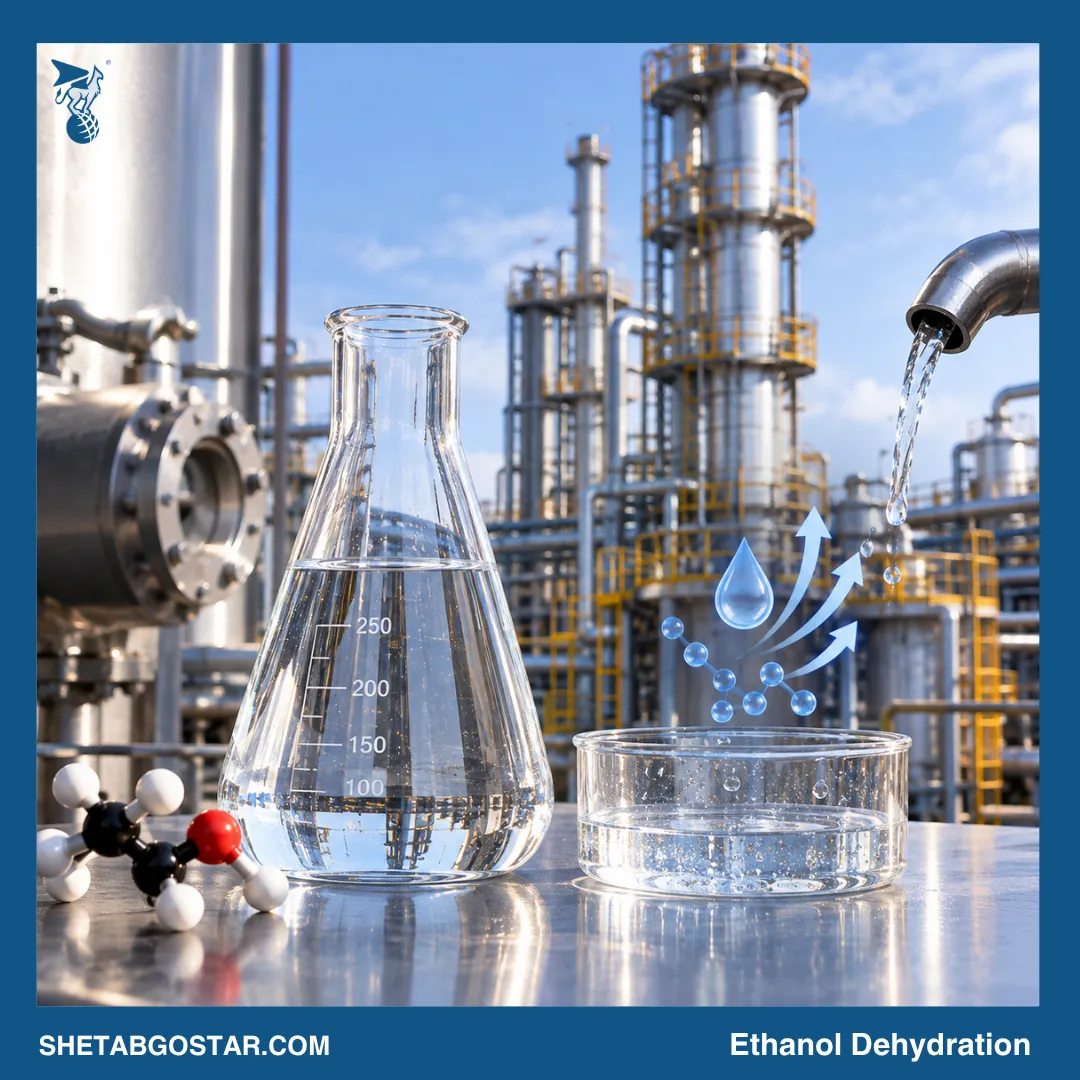
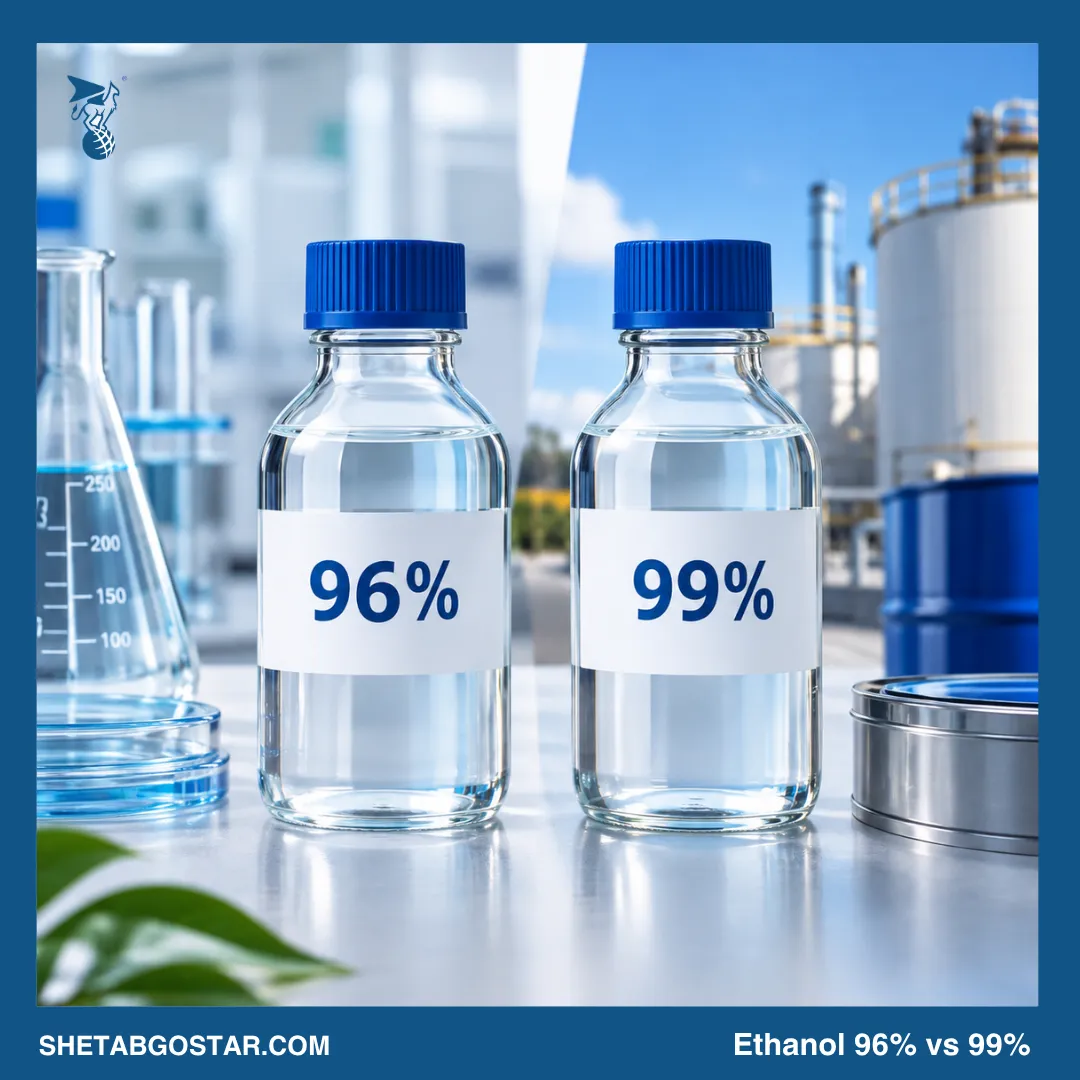
Choosing the right ethanol concentration can directly affect product quality, process efficiency, storage requirements, and purchasing costs. Among the most commonly used grades, Ethanol 96% vs. 99% is an important comparison for industries that require reliable and consistent alcohol purity.
Although both grades are widely used in industrial and commercial applications, their different ethanol concentrations make them suitable for different processes. Understanding these differences can help manufacturers select the appropriate grade without paying for a purity level their application does not require.
What Is the Difference Between Ethanol 96% and 99%?
The primary difference between Ethanol 96% and Ethanol 99% is their ethanol concentration.
Ethanol 96% contains approximately 96% ethanol, with the remaining percentage consisting mainly of water and other permitted components depending on the product specification.
Ethanol 99% has a significantly higher ethanol concentration and contains much less water. This higher purity makes it suitable for applications where moisture can affect product performance, chemical reactions, formulation stability, or final product specifications.
The right choice therefore depends less on which grade has the highest purity and more on what the production process actually requires.
Ethanol 96% vs. 99%: Key Differences
When comparing these two grades, several factors should be considered.
1. Ethanol Concentration
The most obvious difference is concentration. Ethanol 99% provides a higher alcohol concentration than Ethanol 96%, while Ethanol 96% contains a greater proportion of water.
For applications where a controlled amount of water is acceptable, 96% ethanol can provide an effective and economical solution.
2. Water Content
Water content is an important consideration in many industrial processes.
Ethanol 96% naturally contains more water than 99% ethanol. In applications that tolerate or require some water, this difference may not create a problem.
However, processes that require very low moisture levels may benefit from the higher purity of Ethanol 99%.
3. Application Requirements
The appropriate ethanol grade depends heavily on the intended application.
Some industries can use 96% ethanol effectively, while others require higher-purity ethanol because even a small increase in water content can influence the process or final product.
4. Cost Considerations
Higher-purity ethanol generally requires additional processing and tighter quality control. As a result, Ethanol 99% can be more expensive than Ethanol 96%.
For high-volume industrial purchasing, selecting a grade that exceeds the actual process requirement can increase procurement costs without providing a practical benefit.
Industrial Applications of Ethanol 96%
Ethanol 96% is widely used in industries where its concentration and water content meet the required specifications.
Common applications include:
- Chemical manufacturing – Ethanol can be used as a solvent, raw material, or processing agent.
- Pharmaceutical production – Suitable grades can be used in formulations and manufacturing processes according to applicable specifications.
- Cosmetic manufacturing – Ethanol is commonly used as a solvent and carrier in various formulations.
- Cleaning and sanitation – Appropriate ethanol grades can be used in industrial cleaning and sanitizing formulations.
- Food-related applications – Where regulations and product specifications permit, ethanol can serve as a processing ingredient or solvent.
- Extraction processes – Ethanol can be used to extract selected compounds from botanical and other raw materials.
- Industrial formulations – Ethanol is incorporated into a variety of chemical and technical formulations.
The exact suitability of Ethanol 96% should always be confirmed against the technical specification and regulatory requirements of the final product.
Industrial Applications of Ethanol 99%
Ethanol 99% is generally selected when a higher concentration and lower water content are important to the manufacturing process.
Typical applications can include:
- High-purity chemical processing
- Specialized solvent applications
- Laboratory and analytical applications
- Pharmaceutical manufacturing processes requiring higher purity
- Certain extraction and formulation processes
- Manufacturing processes sensitive to water content
- Chemical reactions where excess water may interfere with the process
Because requirements differ between industries, buyers should review the product specification, certificate of analysis, and applicable standards before selecting a grade.
Which Ethanol Grade Is Better for Pharmaceutical Applications?
There is no single ethanol concentration that is automatically appropriate for every pharmaceutical application.
Pharmaceutical manufacturers typically work with detailed specifications covering purity, impurities, water content, denaturants, residual substances, and other quality parameters. For more information on the pharmaceutical applications of Ethanol 96%, see our guide to Ethanol 96% in drug manufacturing.
In some processes, Ethanol 96% may satisfy the required specification. Other applications may require a higher-purity ethanol grade.
Therefore, pharmaceutical buyers should select ethanol based on the specific monograph, formulation requirements, manufacturing process, and applicable regulatory standards rather than concentration alone.
Which Grade Is Better for Chemical Manufacturing?
For chemical manufacturing, the choice between Ethanol 96% and 99% depends on the process chemistry.
If the presence of water does not significantly affect the reaction or formulation, Ethanol 96% can be a practical option.
On the other hand, processes that are sensitive to moisture may require Ethanol 99% or another specified high-purity grade.
Before purchasing, manufacturers should evaluate:
- Required ethanol concentration
- Maximum permitted water content
- Impurity limits
- Reaction sensitivity to moisture
- Required product specifications
- Storage conditions
- Total procurement cost
Ethanol 96% vs. 99% for Extraction Processes
Ethanol concentration can influence extraction efficiency and selectivity.
Ethanol-water mixtures are commonly used because water and ethanol can interact differently with various compounds. As a result, a 96% ethanol mixture may be preferable for certain extraction processes.
In other cases, a higher ethanol concentration may be required to reduce water content or target compounds with different solubility characteristics.
The optimal concentration should therefore be determined according to the raw material, target compounds, extraction method, and desired final product.
Does Higher Purity Always Mean Better Performance?
Not necessarily.
A higher ethanol concentration does not automatically make a product better for every industrial process.
For example, if a manufacturing process is designed around a specific ethanol-water ratio, replacing Ethanol 96% with Ethanol 99% could change process conditions without providing a meaningful improvement.
Similarly, purchasing a higher-purity grade than necessary can increase costs.
The goal should be to select the correct specification, rather than simply choosing the highest available purity.
How to Choose Between Ethanol 96% and 99%
Before placing an ethanol order, manufacturers should evaluate several technical and commercial factors.
1. Define the Required Purity
Start by identifying the minimum ethanol concentration required by the manufacturing process or finished-product specification.
2. Check Water Requirements
Determine whether water is acceptable, neutral, or problematic for the application.
3. Review Impurity Specifications
Ethanol concentration alone does not provide a complete picture of product quality. Review limits for relevant impurities and confirm that the material meets your technical requirements.
4. Consider Regulatory Requirements
Pharmaceutical, food, cosmetic, and other regulated industries may have specific requirements for ethanol quality, labeling, documentation, and permitted applications.
5. Compare Total Cost
Compare the purchase price, transportation, packaging, storage, handling, and any additional processing requirements associated with each grade.
6. Request Technical Documentation
A reliable supplier should be able to provide relevant product documentation, such as a Certificate of Analysis (CoA), Safety Data Sheet (SDS), and technical specifications when applicable.
Storage and Handling Considerations
Both Ethanol 96% and Ethanol 99% require appropriate storage and handling because ethanol is a highly flammable liquid.
Industrial storage areas should be designed to minimize ignition risks and provide appropriate ventilation. Containers should remain properly closed and should be stored according to applicable safety requirements.
Businesses should also consider factors such as:
- Temperature control
- Ventilation
- Fire protection
- Compatible storage containers
- Static electricity control
- Spill management
- Appropriate labeling
- Safe transportation procedures
The exact storage requirements should follow the supplier’s SDS and the applicable local regulations.
Ethanol 96% vs. 99%: Cost and Supply Considerations
For industrial buyers, concentration is only one part of the purchasing decision.
A lower-cost product may not necessarily provide the lowest total cost if it requires additional purification or processing. Conversely, purchasing 99% ethanol when 96% ethanol already satisfies the production specification may unnecessarily increase procurement expenses.
Supply reliability is also important. Buyers should evaluate supplier capacity, product consistency, packaging options, export experience, documentation, lead times, and quality control procedures.
For large-volume purchases, these factors can have a significant effect on overall supply-chain performance.
A Practical Comparison
| Factor | Ethanol 96% | Ethanol 99% |
|---|---|---|
| Ethanol concentration | Approximately 96% | Approximately 99% |
| Water content | Higher | Lower |
| Purity level | High | Very high |
| Typical cost | Generally lower | Generally higher |
| Moisture-sensitive processes | May be unsuitable | Often more suitable |
| General industrial use | Widely applicable | More specialized |
| Selection priority | Process compatibility and cost | Purity and low water content |
Actual specifications can vary by supplier and product grade, so buyers should always verify the technical documentation before ordering.
Final Considerations for Buyers
The choice between Ethanol 96% vs. 99% should be based on technical requirements rather than purity alone.
Ethanol 96% can be an efficient choice for applications where its concentration and water content meet the process specification. Ethanol 99% may be more appropriate for applications that require higher purity or lower moisture content.
Before making a purchase, manufacturers should review the required concentration, water limits, impurity profile, regulatory requirements, packaging, documentation, and total cost.
Choosing the correct ethanol grade can help manufacturers maintain consistent production quality while avoiding unnecessary procurement expenses.
Choose a Reliable Ethanol Supplier
We are a professional ethanol producer, supplier, and exporter, offering ethanol products for industrial and commercial applications. Our focus is on consistent product quality, reliable supply, appropriate packaging, and export support for international customers.
Contact us to discuss your required ethanol grade, specifications, packaging, and bulk supply requirements.