Ethanol Quality Testing Industrial: Risks of Buying Without a Lab Test
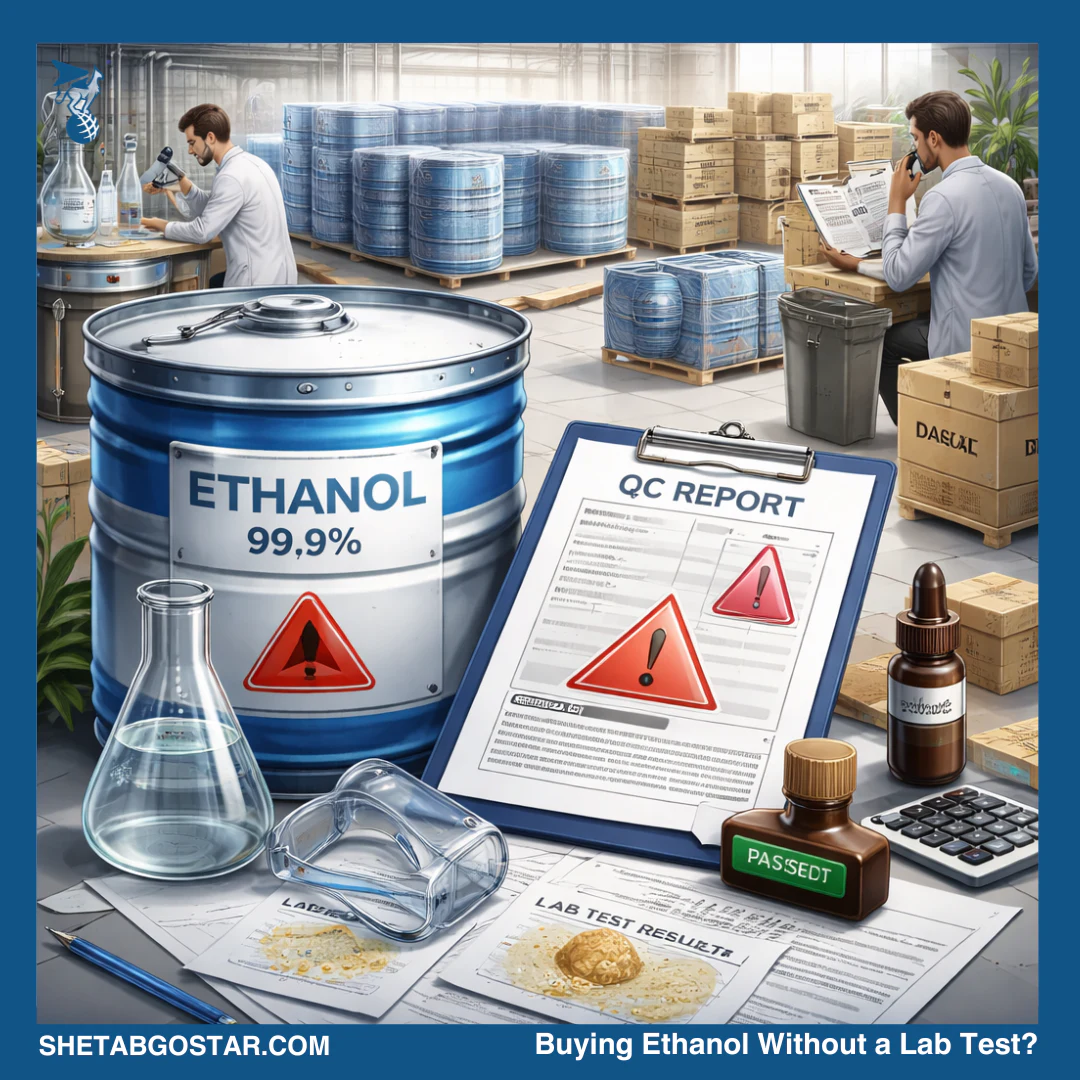
In industrial manufacturing, pharmaceuticals, cosmetics, and laboratory research, ethanol is a foundational solvent. Because its purity directly impacts production outcomes, implementing a strict protocol for ethanol quality testing industrial standards is absolutely essential for every manufacturer. However, some procurement managers still consider buying ethanol without a lab test to reduce costs—a dangerous gamble that exposes businesses to severe operational, financial, and legal hazards.
1. The Hidden Danger of Chemical Contamination
Ethanol is rarely just pure $C_2H_5OH$. Depending on the production method and the supplier’s standards, unverified ethanol can contain trace amounts of highly toxic or disruptive impurities.
-
Methanol: A common byproduct that is highly toxic to humans. Inadvertently using ethanol contaminated with methanol in topical products (like hand sanitizers) or pharmaceuticals can lead to catastrophic health crises and massive product recalls.
-
Water Content: For many industrial applications, especially in electronics or fuel blending, anhydrous ethanol is required. Even a fraction of a percent of unexpected moisture can ruin a batch.
-
Heavy Metals and Denaturants: Without a Certificate of Analysis (CoA) backed by rigorous lab testing, you have no way of knowing if benzene, lead, or unauthorized denaturants are present.
2. Compromising Product Efficacy and Stability
When you bypass ethanol quality testing industrial standards, you compromise the integrity of your end product.
Example: In the cosmetics and perfume industry, ethanol acts as the primary carrier. Impurities can alter the scent profile, cause the solution to become cloudy, or trigger skin irritation in consumers.
In pharmaceutical compounding, inconsistent ethanol purity can alter the dissolution rate of active pharmaceutical ingredients (APIs), rendering medications either ineffective or dangerously potent.
3. Financial Ruin: The True Cost of “Cheap” Ethanol
Buying unverified ethanol often stems from a desire to save money. However, the financial risks far outweigh the upfront savings:
| Risk Factor | Potential Financial Impact |
| Batch Spoilation | Losing an entire production run because the solvent was contaminated. |
| Equipment Damage | High water content or acidic impurities can corrode industrial machinery and pipelines. |
| Product Recalls | The astronomical costs of pulling defective products from retail shelves. |
| Litigation | Lawsuits from consumers or partners injured by defective products. |
4. Regulatory and Compliance Nightmare
Industrial sectors are heavily regulated by bodies such as the FDA, EPA, and REACH. These organizations demand strict traceability and quality control.
If you are caught using ethanol that does not meet established pharmacopeia (e.g., USP, EP) or industrial grade standards, your business faces:
-
Heavy financial audits and fines.
-
The immediate suspension of your manufacturing licenses.
-
Irreparable damage to your brand’s reputation.
Why “Trusting the Supplier” Is Not Enough
Many buyers assume that if a supplier has a good reputation, lab testing can be skipped. This is a critical mistake. Even reputable suppliers can suffer from:
-
Cross-contamination during bulk transport in tankers or drums.
-
Storage degradation due to improper environmental controls.
-
Human error during the batching or denaturing process.
The only definitive shield against these variables is conducting your own independent, third-party ethanol quality testing industrial validation before integrating the chemical into your workflow.
Conclusion: Protect Your Business with Lab Verification
Buying ethanol without a lab test is equivalent to flying blind. The risks—ranging from compromised product safety to total regulatory shutdown—are simply too high.
To safeguard your operations, ensure that every batch of ethanol is accompanied by a verified Certificate of Analysis (CoA) and subjected to internal batch testing. In the industrial world, quality assurance isn’t an expense; it is the ultimate insurance policy.