Caustic Soda in Textile Mercerization: How Sodium Hydroxide Improves Cotton Fabric Performance
Introduction
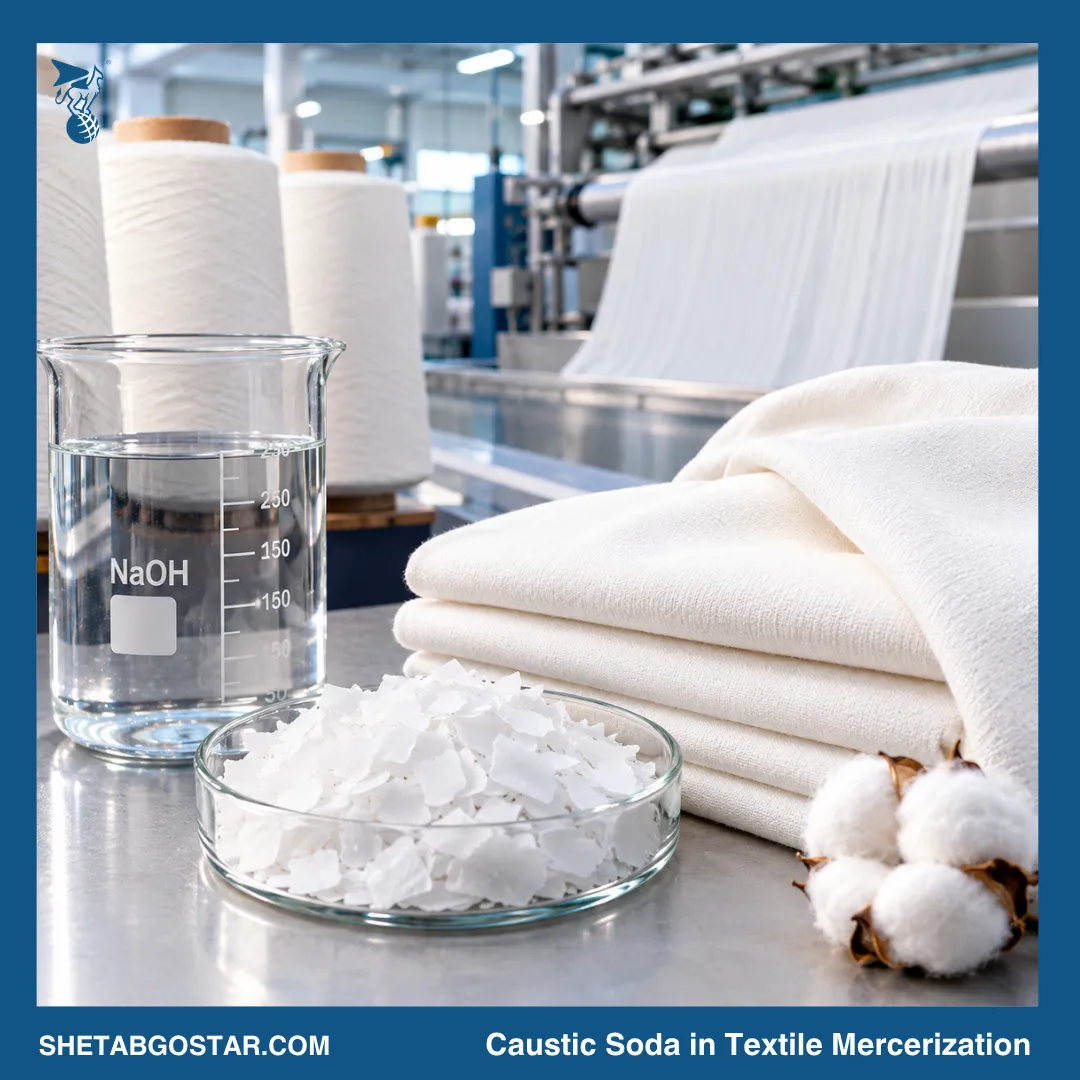
Caustic soda in textile mercerization plays an important role in improving the quality, appearance, and performance of cotton fabrics. Textile manufacturers use sodium hydroxide (NaOH) to modify cotton fibers and prepare them for high-quality dyeing and finishing. This treatment helps produce fabrics with better luster, improved dye absorption, and enhanced dimensional stability.
In modern textile manufacturing, fabric quality directly affects production costs and customer satisfaction. Therefore, mercerization remains an important finishing process for manufacturers seeking consistent results. By controlling caustic soda concentration, temperature, treatment time, and fabric tension, textile producers can achieve the desired properties.
What Is Textile Mercerization?
Mercerization is a chemical finishing process in which cotton fibers or fabrics are treated with a concentrated sodium hydroxide solution. The treatment causes the fibers to swell and changes the internal structure of cellulose.
As a result, the treated cotton can develop improved optical properties and a greater affinity for dyes. When manufacturers maintain appropriate tension during treatment, they can also improve fabric luster and mechanical performance.
Mercerization is commonly applied to cotton yarns, woven fabrics, and selected knitted materials. However, the treatment conditions must match the fiber type and the intended end use.
How Caustic Soda Works in Cotton Mercerization
The effectiveness of caustic soda in textile mercerization depends on its interaction with cellulose, the primary structural component of cotton fibers.
When cotton comes into contact with sodium hydroxide, the solution penetrates the fiber structure and causes substantial swelling. The normally flattened, twisted cotton fibers become more rounded, while their internal cellulose structure undergoes changes.
Beyond mercerization, caustic soda has several other industrial applications. Learn more about the uses of caustic soda in different industries, including textile processing and fabric finishing.
These changes influence several important fabric properties:
- Fiber swelling: Sodium hydroxide changes the dimensions and structure of cotton fibers.
- Improved dye affinity: The modified fiber structure supports better dye uptake under suitable dyeing conditions.
- Enhanced luster: Stretching the fabric during mercerization helps produce a smoother, more reflective surface.
- Dimensional control: Maintaining appropriate tension during treatment helps control shrinkage and fabric width.
- Improved mechanical performance: Properly controlled processing can improve tensile properties, although results depend on the material and operating conditions.
Therefore, mercerization is more than a simple chemical washing step. It is a controlled treatment that modifies cotton fibers to improve their performance during subsequent textile processing.
Key Benefits of Caustic Soda in Textile Mercerization
1. Improved Cotton Fabric Luster
One of the most recognizable benefits of mercerization is increased fabric luster. Untreated cotton fibers have a naturally twisted, ribbon-like structure that scatters light.
During mercerization, sodium hydroxide causes the fibers to swell. When the fabric remains under controlled tension, the fibers become more uniform and reflect light more effectively.
Consequently, mercerized cotton often develops a smoother and more lustrous appearance. This characteristic is particularly valuable in premium shirts, bed linens, decorative fabrics, and other cotton products where appearance influences purchasing decisions.
2. Better Dye Absorption and Color Quality
Dyeing performance is another major reason textile manufacturers use caustic soda. Mercerized cotton generally has a greater affinity for many textile dyes than untreated cotton.
This improved dyeability can help manufacturers achieve deeper shades, brighter colors, and more consistent dyeing results. It can also support more efficient use of dyes, depending on the dye system and process conditions.
Furthermore, improved dye uptake may reduce the need for corrective dyeing operations. However, the final result still depends on dye selection, fabric preparation, water quality, and dyeing parameters.
3. Enhanced Fabric Strength
Cotton manufacturers also use mercerization to improve the mechanical performance of selected fabrics. The changes in fiber structure can contribute to better tensile properties when the process is properly controlled.
Fabric tension is particularly important because it influences how the material responds during treatment. Excessive or poorly controlled tension, however, can damage the fabric or create uneven results.
For this reason, manufacturers should evaluate tensile strength and other relevant properties through appropriate quality-control tests rather than assuming that every mercerized fabric will achieve the same improvement.
4. Improved Dimensional Stability
Dimensional stability affects the fit, appearance, and durability of finished textile products. Uncontrolled shrinkage can create production problems and increase material waste.
During mercerization, manufacturers regulate fabric tension and remove the sodium hydroxide solution through carefully controlled washing. These steps help control dimensional changes and establish the desired fabric width.
Nevertheless, mercerization does not eliminate every form of shrinkage. Additional finishing treatments and appropriate dimensional testing may still be necessary.
5. More Consistent Fabric Quality
Consistency is essential for textile manufacturers producing large volumes of cotton fabric. Variations in chemical concentration, temperature, contact time, or tension can create differences in luster, dye uptake, and fabric dimensions.
A well-managed mercerization process helps reduce these variations. Consequently, manufacturers can improve batch consistency and maintain more predictable finishing results.
The Main Stages of the Mercerization Process
Industrial mercerization typically involves several connected stages. Each stage contributes to the final quality of the fabric.
Step 1: Fabric Preparation
Before treatment, manufacturers prepare the cotton fabric to support uniform contact with the sodium hydroxide solution.
Depending on the production line, preparation may include cleaning, desizing, or other pretreatment operations. Removing unwanted materials helps the chemical solution contact the fibers more evenly.
Step 2: Sodium Hydroxide Application
The prepared fabric passes through a controlled caustic soda solution. The solution concentration, temperature, and contact time must be selected according to the fabric and the intended result.
Industrial mercerization commonly uses concentrated sodium hydroxide solutions. However, the optimum operating conditions vary between production systems and should follow validated process specifications.
Step 3: Tension Control
After chemical application, the fabric may pass through a tension-control system, such as a tenter frame or another suitable stretching mechanism.
Maintaining the correct width and tension helps develop the desired luster and dimensional properties. In contrast, slack mercerization allows greater fabric contraction and produces different physical characteristics.
Step 4: Washing and Alkali Removal
After the treatment, manufacturers wash the fabric to remove residual sodium hydroxide. Washing must be sufficiently effective to prevent excessive alkalinity from affecting subsequent dyeing or finishing operations.
Some production systems also include controlled neutralization, followed by additional rinsing. The final washing conditions should ensure that residual alkali meets the manufacturer’s quality requirements.
Step 5: Quality Inspection and Finishing
Finally, the treated fabric undergoes inspection and, where required, additional finishing and drying.
Quality-control teams may assess luster, color performance, dimensional changes, tensile properties, and residual pH. These checks help confirm that the fabric meets the required production specifications.
Factors That Affect Mercerization Quality
Although sodium hydroxide is the primary chemical used in conventional cotton mercerization, chemical selection alone does not determine the final result.
Manufacturers should control several important variables.
Sodium hydroxide concentration: The concentration influences fiber swelling and the extent of structural modification. Insufficient concentration may produce incomplete treatment, while unsuitable conditions can damage the material.
Temperature: Temperature affects the behavior of the alkaline solution and the response of cotton fibers. Consistent temperature control helps maintain repeatable processing conditions.
Treatment time: The fabric must remain in contact with the solution long enough to achieve the intended effect. Inadequate contact can cause uneven treatment.
Fabric tension: Tension influences luster, width, shrinkage, and other dimensional characteristics. Its setting should reflect the desired fabric properties.
Washing efficiency: Incomplete alkali removal can affect downstream processes and create quality problems. Effective washing is therefore essential.
Process monitoring: Regular measurement of chemical concentration and inspection of finished fabric help identify variations before they become major production problems.
By monitoring these factors together, manufacturers can improve process reliability and reduce avoidable quality defects.
Safety Considerations When Using Caustic Soda
Sodium hydroxide is a highly corrosive chemical that can cause severe skin burns and serious eye damage. Therefore, textile facilities must implement appropriate chemical-handling procedures.
Workers should use suitable chemical-resistant gloves, protective clothing, and eye or face protection. Facilities should also provide appropriate ventilation where necessary, emergency washing equipment, and clearly documented spill-response procedures.
In addition, operators must follow the supplier’s safety data sheet and the site’s chemical-handling requirements. Equipment, storage tanks, pipes, and seals should be compatible with the actual concentration and operating conditions.
Chemical dilution and preparation require particular care because dissolving sodium hydroxide in water releases heat. Trained personnel should follow approved procedures and never improvise chemical mixing operations.
Environmental Management and Caustic Soda Recovery
Mercerization can generate wastewater containing residual sodium hydroxide and other dissolved materials. If this wastewater is not managed properly, its high alkalinity can create environmental problems.
Textile manufacturers should therefore monitor wastewater pH, manage alkaline effluent through appropriate treatment systems, and comply with applicable discharge regulations.
Where technically and economically feasible, caustic soda recovery systems can help reduce chemical consumption and wastewater treatment demands. Effective recovery may also lower operating costs by allowing recovered alkali to be reused under controlled conditions.
However, recovery performance depends on wastewater composition, process design, equipment efficiency, and the quality requirements of the production line.
How to Choose Caustic Soda for Textile Manufacturing
Selecting a suitable caustic soda supplier is an important part of reliable textile production. Chemical quality and consistency can influence process control, operating efficiency, and finished fabric performance.
Before purchasing sodium hydroxide, textile manufacturers should evaluate the following factors:
- Purity and concentration: Confirm that the product meets the technical specifications required by the process.
- Certificate of Analysis (COA): Review the batch-specific analytical results and relevant impurity limits.
- Product consistency: Check whether the supplier can maintain consistent quality across repeated shipments.
- Packaging and transportation: Select suitable packaging and delivery arrangements for the plant’s storage and handling systems.
- Supply reliability: Evaluate production capacity, lead times, and the supplier’s ability to meet ongoing demand.
- Technical documentation: Request the safety data sheet and other relevant product documentation before use.
A reliable procurement process helps manufacturers reduce supply risks and maintain stable production schedules. Buyers should compare suppliers based on documented product quality, delivery performance, and total purchasing costs rather than price alone.
Conclusion
Caustic soda in textile mercerization is an important part of cotton finishing because it changes the structure of cellulose fibers and improves several commercially valuable fabric properties. These benefits include increased luster, better dye affinity, improved dimensional control, and potentially enhanced mechanical performance.
However, the results depend on appropriate chemical concentration, temperature, treatment time, tension, and washing efficiency. Manufacturers must also maintain strict chemical safety procedures and manage alkaline wastewater responsibly.
By combining consistent raw materials with effective process control, textile producers can improve fabric quality and achieve more reliable manufacturing results.
Looking for a reliable caustic soda supplier for textile manufacturing?
Contact our team to request product specifications, a Certificate of Analysis, and a quotation for your industrial requirements. Our team can help you evaluate suitable supply options for your production needs.