Incoterms Selection and Packaging Economics in High-Volume Hydrochloric Acid Transactions
High-volume hydrochloric acid transactions require more than negotiating the chemical price. Buyers and sellers must also evaluate transportation responsibility, insurance, packaging, handling, documentation, and delivery risk. Choosing the right Incoterm can significantly influence the total landed cost, while an inefficient packaging strategy can increase freight and handling expenses.
For international hydrochloric acid trade, these decisions become particularly important because hydrochloric acid is a corrosive substance classified for transport as UN 1789. Packaging, marking, and transportation therefore need to comply with applicable dangerous-goods requirements.
Why Incoterms Matter in High-Volume Hydrochloric Acid Transactions
Incoterms define important responsibilities between buyers and sellers, including delivery points, transportation costs, and the transfer of risk. The ICC currently recognizes Incoterms 2020 as the latest version, containing 11 standardized trade terms.
For bulk hydrochloric acid purchases, selecting an Incoterm should not be based only on the quoted product price. Instead, procurement teams should consider:
- Freight and inland transportation costs
- Export and import responsibilities
- Insurance requirements
- Loading and unloading arrangements
- Packaging and handling costs
- Customs procedures
- Risk-transfer points
- Port and terminal charges
A low unit price under one Incoterm can therefore produce a higher final cost than a slightly higher quotation under another term.
Choosing the Right Incoterm for Hydrochloric Acid
Different Incoterms can produce very different commercial structures. For high-volume chemical transactions, FCA, CPT, CIP, DAP, FOB, CFR, and CIF are among the terms that may be considered depending on the transport mode and contractual structure.
FCA for Greater Buyer Control
FCA can be useful when the buyer has strong relationships with freight forwarders or wants greater control over international transportation.
Under an FCA structure, the seller handles the agreed delivery to the carrier or designated location, while the buyer manages subsequent transportation according to the contract.
This approach can work well for experienced chemical importers that negotiate competitive freight rates across multiple suppliers.
CIF and CFR for Maritime Shipments
For sea shipments, CFR and CIF can simplify procurement by allowing the seller to arrange the main carriage.
CIF additionally includes insurance arranged by the seller. However, buyers should carefully distinguish between the seller’s insurance obligation and the actual level of protection required for the shipment.
The ICC’s Incoterms 2020 framework separates rules applicable to any mode of transport from those designed specifically for sea and inland-waterway transport.
DAP for Simplified Procurement
DAP can be attractive when the buyer wants the seller to organize transportation to a specified destination.
This can reduce the buyer’s logistics workload. However, the quotation should be evaluated as a landed-cost structure, rather than simply compared with the chemical price offered under FCA or FOB.
Packaging Economics in Bulk Hydrochloric Acid Supply
Packaging represents a significant component of logistics economics. The optimal solution depends on shipment volume, destination, transport mode, storage infrastructure, handling equipment, and regulatory requirements.
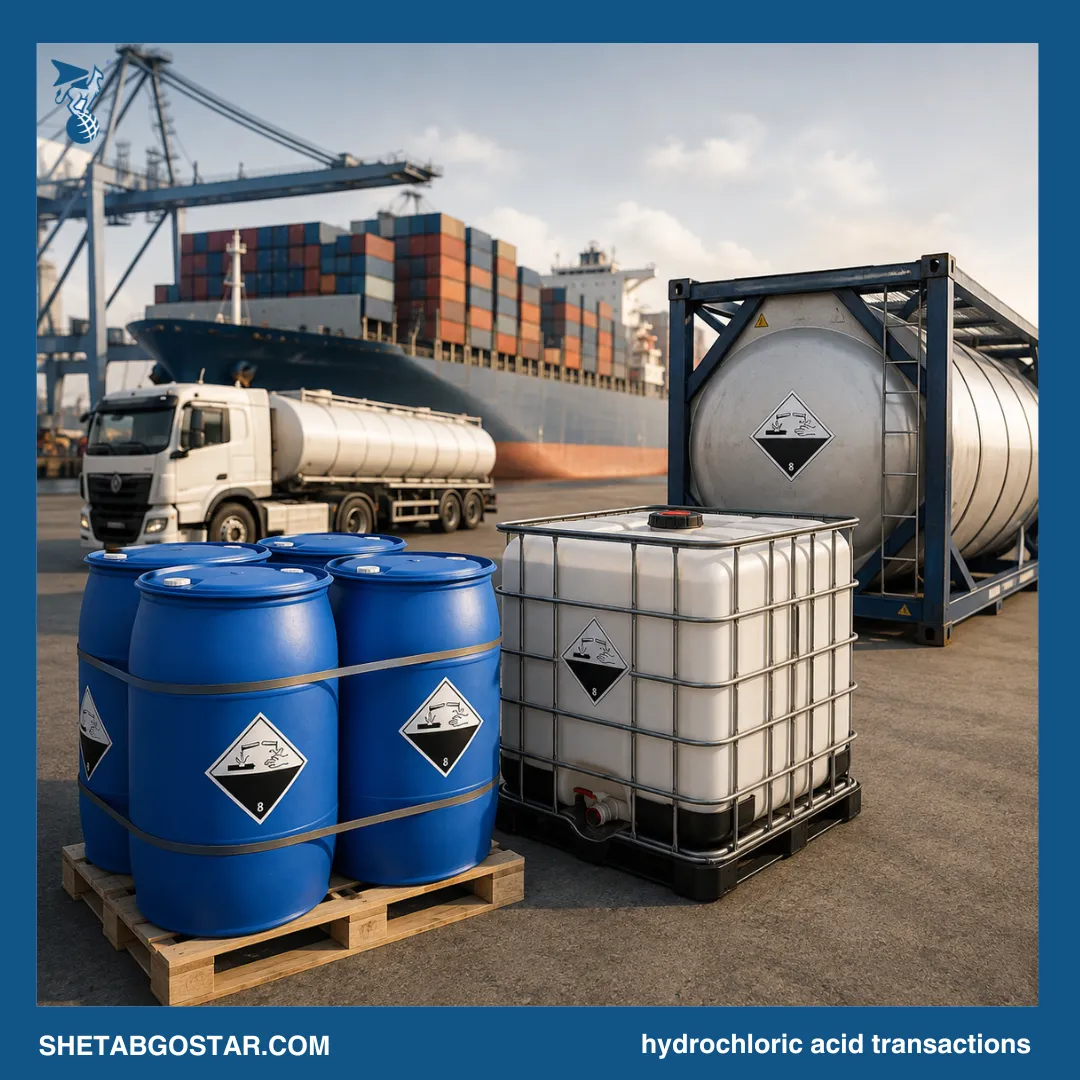
Common commercial configurations can include:
- Compatible drums for smaller industrial shipments
- IBC solutions where permitted by applicable regulations
- Tank containers or portable tanks
- Dedicated bulk tankers
- Other approved packaging systems appropriate to the concentration and transport regulations
The key objective is not simply to select the cheapest container. Instead, buyers should evaluate the total packaging cost per metric ton delivered.
Packaging represents a significant component of logistics economics in [hydrochloric acid exports from Iran], where shipment volume, destination, transport mode, and buyer requirements can directly affect the final delivered cost.
How Packaging Changes the Total Cost
Packaging affects several cost categories simultaneously.
1. Packaging Material Cost
The initial cost of drums, IBCs, tank containers, or other approved systems contributes directly to the transaction price.
However, cheaper packaging is not necessarily more economical. Compatibility with hydrochloric acid, structural integrity, regulatory approval, and handling requirements must also be considered.
2. Freight Utilization
Packaging affects how efficiently a shipment uses available vehicle or container capacity.
If packaging consumes excessive space or creates inefficient weight distribution, the buyer may pay more freight per metric ton of hydrochloric acid.
High-volume transactions therefore require optimization of both payload utilization and packaging configuration.
3. Handling Costs
Every additional handling operation can increase labor requirements and the possibility of leakage, damage, or delays.
A bulk system may reduce the number of individual handling operations compared with multiple smaller packages. Nevertheless, the receiving facility must have the appropriate unloading and storage infrastructure.
4. Return and Disposal Costs
Reusable packaging can create additional logistical requirements if containers need to be returned.
Conversely, disposable or single-use packaging may create waste-management expenses. The commercial evaluation should therefore include the full packaging lifecycle rather than only the initial purchase price.
Regulatory Compliance and Packaging Selection
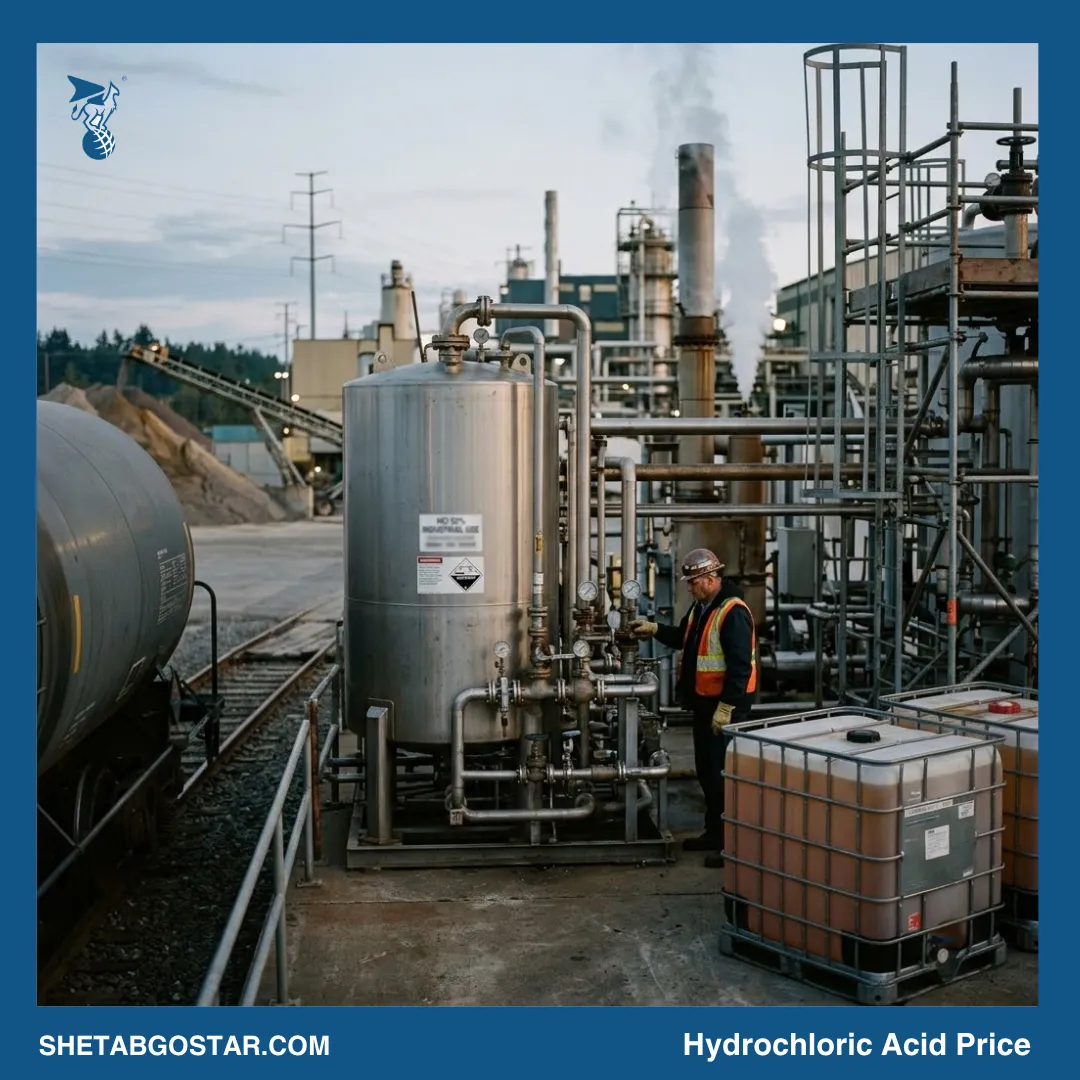
Hydrochloric acid shipments require careful attention to dangerous-goods regulations. Official transport information identifies hydrochloric acid as UN 1789 and specifies requirements concerning packaging, labeling, and transport.
For example, required package markings must remain visible and legible and withstand normal weather exposure during transportation.
This means packaging decisions should be made together with the logistics and compliance teams. A packaging option that appears inexpensive may become commercially unsuitable if it does not satisfy the regulations applicable to the intended transport route.
For international shipments, the relevant rules can differ according to whether the cargo moves by road, rail, inland waterway, or sea. Consequently, the seller and buyer should confirm the applicable dangerous-goods requirements before finalizing the shipping configuration.
Comparing Incoterms and Packaging as a Total-Cost Model
A practical procurement model should compare the complete delivered cost rather than the chemical quotation alone.
A simplified calculation can be expressed as:
Total Landed Cost = Product Price + Packaging + Inland Freight + Main Freight + Insurance + Handling + Customs-Related Costs + Other Applicable Charges
The exact cost components depend on the selected Incoterm and destination.
For example, suppose Supplier A offers hydrochloric acid at a lower product price under FCA, while Supplier B offers a higher price under CIF. Supplier A may initially appear cheaper. However, after adding freight, insurance, handling, and additional logistics costs, Supplier B could provide the lower total landed cost.
Therefore, purchasing teams should compare quotations on an equivalent commercial basis.
How to Optimize High-Volume Hydrochloric Acid Transactions
Several strategies can improve purchasing efficiency.
Consolidate Shipment Volumes
Larger and better-planned shipments can potentially improve freight utilization and reduce the logistics cost per metric ton.
Standardize Packaging
Where operationally and legally appropriate, using standardized packaging configurations can simplify handling, storage, inspections, and procurement.
Compare Multiple Incoterms
Do not evaluate suppliers using only one delivery term. Request comparable quotations under relevant Incoterms to identify the most economical supply structure.
Calculate the Landed Cost
Procurement decisions should focus on the final delivered cost rather than the supplier’s headline price.
Coordinate Packaging and Logistics
Packaging should be selected alongside the transport method. A packaging format that works well for road transportation may not necessarily provide the same economic advantage for maritime shipments.
Review Risk Allocation
The cheapest commercial term is not always the best option. Buyers should determine which party can manage transportation, insurance, customs, and delivery risks more efficiently.
Incoterms and Packaging: A Strategic B2B Decision
In high-volume hydrochloric acid transactions, Incoterms selection and packaging economics are closely connected. The delivery term determines how transportation responsibilities and risks are allocated, while packaging influences freight efficiency, handling requirements, compliance, and total logistics expenditure.
A strong procurement strategy therefore evaluates product price, packaging cost, freight, insurance, compliance, and risk as one integrated model.
For buyers and distributors, the most competitive supplier is ultimately the one that provides the best combination of product quality, regulatory compliance, reliable delivery, and total landed cost—not necessarily the lowest initial quotation.