Transport and Storage Challenges of Export Hydrochloric Acid in Tropical Climates
Exporting hydrochloric acid to tropical regions requires careful planning because high temperatures, humidity, strong sunlight, and long transportation routes can increase operational and safety risks. Proper hydrochloric acid storage and transportation practices help protect product quality, packaging integrity, workers, and the surrounding environment.
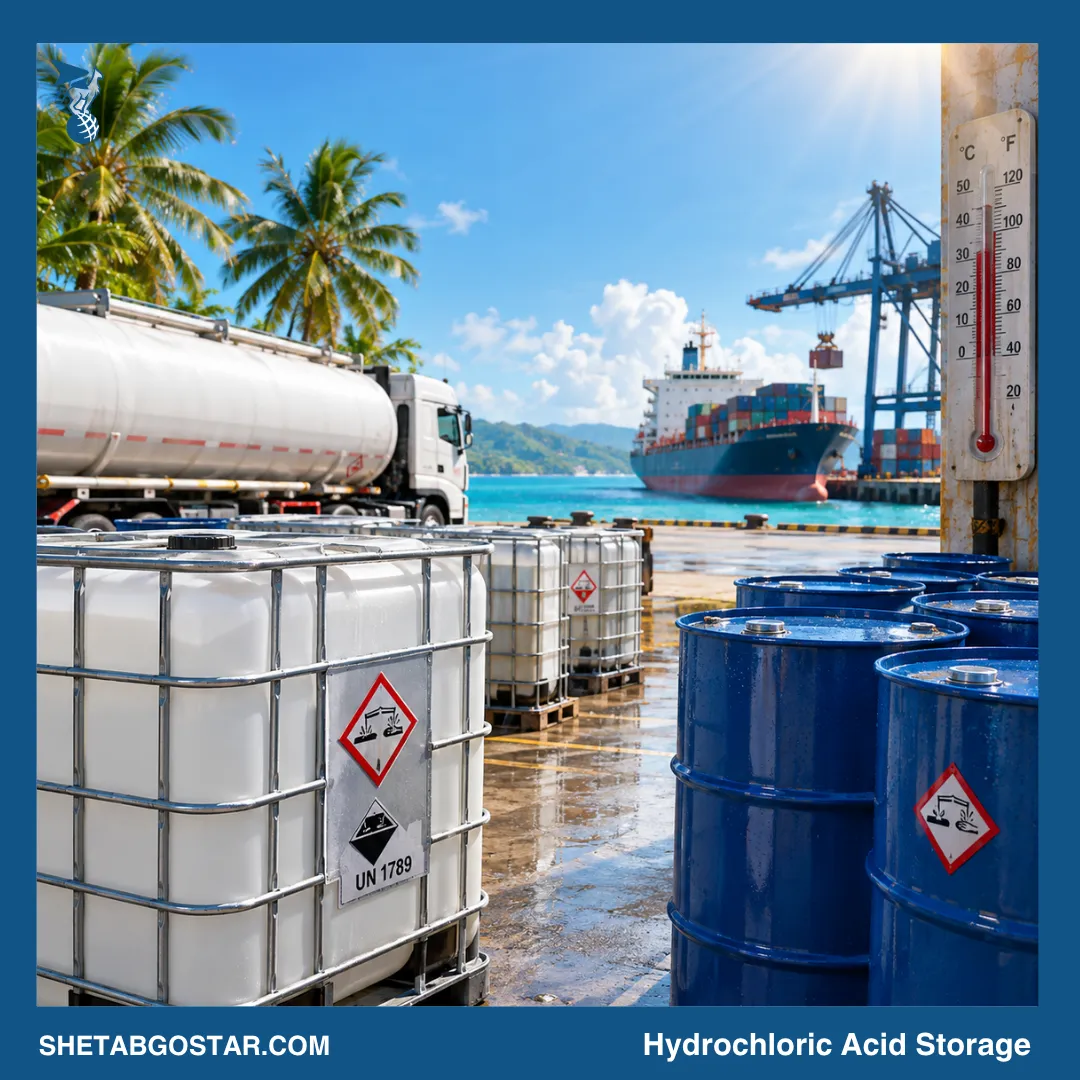
Hydrochloric acid is a highly corrosive chemical. It can attack incompatible metals and release irritating hydrogen chloride vapors. For international shipments, exporters must therefore consider packaging compatibility, temperature exposure, ventilation, loading procedures, documentation, and emergency response planning. Hydrochloric acid is commonly transported as UN 1789, Class 8 corrosive material, although the applicable packing group depends on the product concentration and transport regulations.
Why Tropical Climates Create Additional Challenges
Tropical destinations often combine high ambient temperatures with high humidity and intense solar radiation. These conditions can make chemical logistics more demanding than transportation through moderate climates.
Heat can increase pressure inside closed containers, while prolonged exposure to sunlight can raise the temperature of the chemical and its packaging. Humidity also creates a more aggressive environment for external metal surfaces and transport equipment.
For this reason, exporters should treat climate exposure as part of the logistics plan rather than as a secondary consideration.
1. Temperature Control During Transportation
Temperature is one of the most important factors in hydrochloric acid logistics. Excessive heat can increase vapor pressure and place additional stress on containers, closures, valves, and fittings.
A reliable transportation plan should therefore:
- Avoid unnecessary exposure to direct sunlight.
- Minimize prolonged waiting periods in hot locations.
- Select packaging designed for the chemical and expected transport conditions.
- Inspect closures, valves, and fittings before loading.
- Follow the supplier’s SDS for the recommended storage and handling temperature.
Some commercial hydrochloric acid products specify controlled storage ranges such as 15–25°C, demonstrating why the exact product SDS should be consulted instead of applying one temperature limit to every HCl concentration.
2. Packaging Compatibility in Tropical Conditions
Packaging selection is critical because hydrochloric acid is corrosive to many materials. Containers, liners, valves, gaskets, and other components that contact the chemical must be chemically compatible.
Plastic-based systems are widely used for hydrochloric acid applications, but the exact material and construction should be selected according to concentration, container size, transportation method, and manufacturer specifications.
Transport regulations also require containers and vehicle systems to prevent leakage under normal transport conditions, including the effects of vibration and changes in temperature, humidity, and pressure.
Before export, suppliers should inspect:
- Container walls and external surfaces.
- Caps, valves, and seals.
- Liners and protective coatings.
- Signs of deformation or chemical attack.
- Labels and hazard markings.
- Secondary containment where applicable.
3. Corrosion Risks During Storage
Corrosion is a major concern in tropical warehouses because hydrochloric acid can release corrosive vapors. These vapors can damage nearby metal structures, electrical equipment, shelving, and transportation infrastructure.
A suitable storage area should be well ventilated and designed with corrosion-resistant materials. Guidance for hydrochloric acid handling also emphasizes separating the chemical from incompatible substances and providing appropriate spill-management facilities.
In tropical environments, warehouses should receive particular attention to:
- Ventilation and air movement
- Corrosion-resistant floors and surfaces
- Drainage and spill containment
- Protection from direct sunlight
- Separation from incompatible chemicals
- Regular inspection of storage containers
4. Humidity and External Corrosion
High humidity does not necessarily change the chemical itself, but it can make the surrounding environment more corrosive. Acid vapors combined with moisture can accelerate deterioration of unprotected metal surfaces.
This problem becomes particularly important around tank fittings, loading areas, pumps, pipes, steel frames, and warehouse equipment.
Therefore, exporters and receivers should inspect not only the HCl container but also the infrastructure surrounding it. Preventive maintenance can identify corrosion before it develops into a leak or equipment failure.
5. Container Loading and Securing
Long-distance export shipments can involve multiple handling stages, including factory loading, inland transportation, port operations, ocean freight, customs clearance, and final delivery.
During these stages, containers can experience vibration, movement, temperature changes, and mechanical impacts.
The cargo should therefore be properly secured to minimize movement. International dangerous-goods requirements emphasize preventing leakage and ensuring that containers and transport equipment remain compatible with the substance during normal transportation conditions.
Loading procedures should include:
- Checking container condition before loading.
- Confirming that valves and closures are properly secured.
- Using suitable restraints and supports.
- Preventing contact with incompatible materials.
- Verifying labels and shipping documents.
- Inspecting the load before dispatch.
6. Port Delays and Long Transit Times
Tropical export routes can involve extended port stays, customs inspections, transshipment, and delays caused by weather or vessel schedules. For a broader overview of cross-border hazmat logistics for hydrochloric acid exports, exporters should also consider transportation routes, packaging, documentation, and regulatory compliance.
A shipment that remains exposed to heat for several additional days may experience more severe packaging and handling challenges.
Exporters can reduce these risks by coordinating vessel schedules carefully, minimizing unnecessary storage at ports, and confirming that terminals have suitable facilities for corrosive dangerous goods.
The transport classification, documentation, segregation, and handling requirements should always be verified for the specific destination and transport mode.
7. Storage at the Destination
The challenges do not end when the shipment reaches the destination port. Proper hydrochloric acid storage at the receiving facility is equally important.
The storage area should be:
- Cool and adequately ventilated
- Protected from direct sunlight
- Designed for corrosive chemicals
- Equipped with suitable spill containment
- Separated from incompatible substances
- Regularly inspected for leakage and corrosion
For example, hydrochloric acid should not be stored together with incompatible chemicals such as strong oxidizers. Storage guidance also emphasizes keeping containers tightly closed and maintaining adequate ventilation.
8. Ventilation and Hydrogen Chloride Vapors
Hydrochloric acid can release hydrogen chloride vapors, particularly when containers are opened or when leaks occur. In an enclosed warehouse, inadequate ventilation can increase worker exposure.
Storage and handling areas should therefore have appropriate ventilation and emergency procedures. Workers should also have access to suitable personal protective equipment and emergency washing facilities.
Hydrochloric acid should never be transferred or opened in confined transportation spaces without appropriate ventilation and controls.
9. Documentation and Dangerous Goods Compliance
International hydrochloric acid exports require accurate documentation. The exact requirements depend on the country, concentration, transport mode, packaging, and applicable regulations.
Common documentation and compliance considerations include:
- Safety Data Sheet (SDS)
- Dangerous goods declaration
- Correct UN number and shipping name
- Appropriate hazard labels and marks
- Packaging information
- Commercial and customs documents
- Emergency response information
- Destination-country requirements
For example, current dangerous-goods information identifies hydrochloric acid as UN 1789 with Class 8 corrosive classification.
10. Emergency Planning for Tropical Routes
Every export shipment should have an emergency response plan. This becomes especially important when transportation routes cross multiple countries or include remote areas.
Emergency planning should address:
- Container leakage
- Damaged packaging
- Road accidents
- Port incidents
- Worker exposure
- Unplanned temperature exposure
- Spill containment
- Communication with emergency services
Suitable emergency equipment should be available according to the applicable SDS and transport regulations. Personnel should also understand how to isolate a damaged shipment without creating additional exposure.
Best Practices for Hydrochloric Acid Export Logistics
A practical tropical-climate strategy combines chemical compatibility, temperature management, secure transportation, and regulatory compliance.
Exporters should:
- Review the current SDS before every major shipment.
- Select packaging specifically compatible with the HCl concentration.
- Protect containers from excessive heat and direct sunlight.
- Inspect valves, closures, seals, and container surfaces.
- Use adequate ventilation at storage and transfer locations.
- Keep hydrochloric acid away from incompatible chemicals.
- Secure containers against movement during transportation.
- Minimize unnecessary delays at ports and intermediate warehouses.
- Verify dangerous-goods documentation before dispatch.
- Establish a clear emergency response procedure.
Conclusion
Exporting hydrochloric acid to tropical climates requires more than selecting a suitable transport container. Heat, humidity, corrosion, vapor release, port delays, packaging compatibility, and regulatory requirements can all affect the safety and reliability of the supply chain.
Effective hydrochloric acid storage begins with compatible packaging and continues through transportation, port handling, warehouse storage, and final delivery. By controlling temperature exposure, preventing corrosion, securing containers, maintaining ventilation, and following applicable dangerous-goods requirements, exporters can significantly reduce logistics risks.
For international buyers, choosing an experienced hydrochloric acid supplier is also important. A reliable supplier should be able to provide appropriate product specifications, SDS documentation, export packaging, and logistics support for the destination market.